
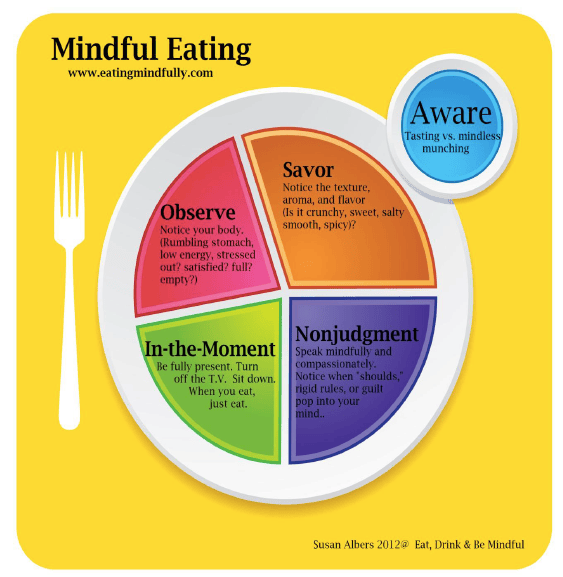
The social eating season has begun which poses a challenge for mindful eating! Autumn brings pumpkin-spiced everything out of hibernation and tailgating parties abound which transforms into weekly holiday parties which run until January first. Not to mention, we- in Wisconsin- have recently lost an hour of daylight which can make healthful choices that much more difficult for individuals who combat S.A.D. (Seasonal Affective Disorder). Many settle in to the fact that they will gain the 5-pound average this holiday season and celebrate that it is the season to eat emotionally.
The New Year provides an opportunity to reflect, plan, prepare and strive to do better the next year. While this pattern is likely ingrained in our minds, families, and culture, does it have to be this way? Do we have to slide from one end of the eating spectrum to the other; gluttony to restraint?
Many in the healthcare community preach moderation; Consume sweets in moderation, enjoy alcohol in moderation, and even exercise in moderation. But, this word- moderation- is rarely defined and when open to interpretation, we will often seek a self-serving definition. It is unlikely that a vague nutrition ideology is going to break the chains of perpetual holiday indulgence. One needs to identify a simple, powerful and personal philosophy around food and nutrition. Eating well is not about restriction; it is about harnessing the power of nutrition to fuel our bodies to work, learn and play. It is about feeling good from inside out, having more energy and maintaining a healthier relationship with food.
What is your food philosophy? Does it support holistic health year-round? If not, you may want to consider rethinking the what, when, where, and mostly why and how you eat. This investigation may lead you to mindfulness. Mindful eating is a strategy for connecting the mind’s thoughts and attitudes about food with the body’s needs. Over the years, we often lose contact with our internal hunger cues and begin to eat for a variety of reasons and often those that are not the basic need for energy. We eat because we are sad, celebrating, lonely, bored, busy, or simply because everyone else is and “it” looks good.
| Physical Hunger | Psychological (“Head”) Hunger |
|
|
If you feel ready to dip your toe in the freeing waters of mindful eating, try the following steps for a mindful meal. Consider practicing a mindful meal with friends and family at least one time each week this season. You may also find this placemat to be a helpful reminder!
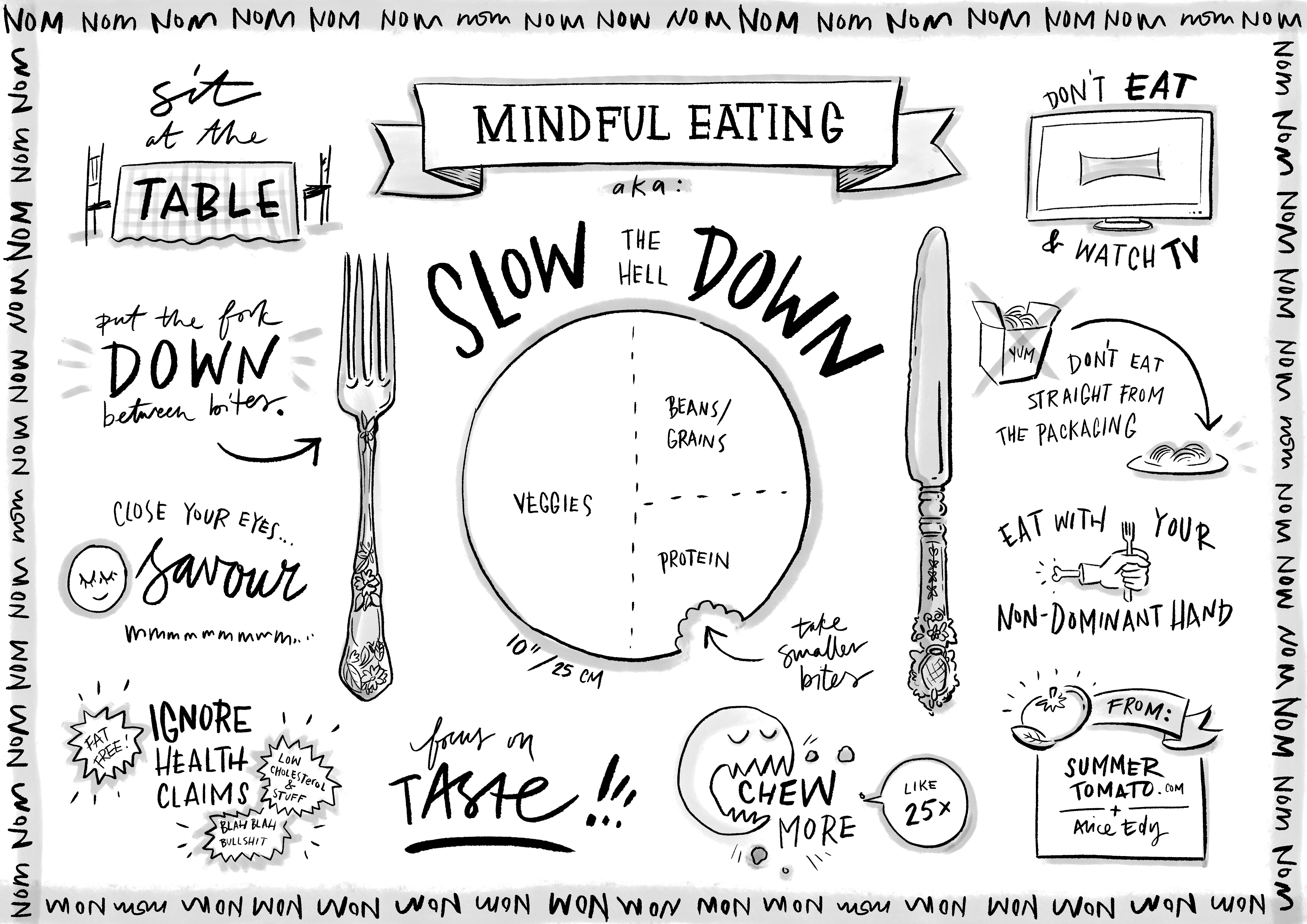
Mindful eating begins with quieting the environment at meals and snacks and tuning into what is going on inside the body and mind. The following is a guide to pursuing a mindful meal.
Take a moment to relax. Breathe deeply in through your nose and out through your mouth. Allow your belly to rise when you breathe in and fall as you breathe out. Ask yourself where you feel hungry; Mind? Belly? Anywhere else? Rate your hunger using the following scale:
- Starved with severe hunger pangs that are present on and off for greater than 30 minutes. You may also have a headache or feel fatigued or irritable.
- Very hungry with hunger pangs on and off for at least 15 minutes. You may also have constant thoughts about food with increased sense of taste and smell.
- Hungry and notice that the stomach is growling with an increased sense of taste and smell.
- Somewhat hungry and may first experience feelings of true hunger. Plan to eat in the next 30 minutes.
- Neutral and feel neither hungry nor full.
- Somewhat satisfied and starting to feel food in the stomach but do not feel ready to stop eating.
- Satisfied and could most likely go at least 2 hours without feeling hunger.
- Starting to feel full and could go 3-4 hours without feeling hunger.
- Very full with some discomfort and desire to sit and rest or nap.
- Stuffed with painful pressure inside the stomach is painful and feeling of sleepiness.
Imagine what type of food would satisfy the hunger.
- Texture: crunchy, smooth, chewy
- Temperature: cold, warm, cool
- Density: heavy, light
- Taste: sweet, salty, spicy, sour
Prepare and portion the food in a manner that your body needs versus wants.
Choose a peaceful place to eat. Try to eat most of the meals seated at a table where the food is prepared, such as the kitchen or the dining room. Limit distractions such as t.v., computer, phone, radio, books or magazines.
Eat slowly and savor every bite. Notice all that you can when eating, such as what the food tastes, smells and feels like. Chew the food slowly and take a moment to rest between bites. Try to make meals and snacks last at least 20 minutes.
Check-in early and often. Stop after you have eaten about 10 bites to assess your level of hunger or satisfaction using the scale above. Continue to eat and evaluate every few bites. Stop eating when you would rate yourself as a 7 or 8 on the scale above.
Pause after eating to enjoy the satisfaction. Again, connect and strengthen this internal feeling of satisfaction (satiety) and recognize how it differs from fullness. If we asked Goldilocks, she would say it is “just right.”
By becoming more aware of your body’s nutritional needs versus its desires, one can navigate the muddy waters of social and emotional eating with greater ease. One can grow in confidence and may be able to stand up to Aunt Lorraine’s insistence this holiday season to take just one more slice. Mindful eating is also contagious and may nudge a cascade of becoming more mindful in all areas of life.


