“If I fast long enough, will I turn on autophagy?”
After my last post, Eating With Your Cycle, I started to wonder about the “why” behind fasting. Autophagy. Mitochondria reset. Longevity. Cellular energy. All rose to the top in my search. It’s clear that health has turned inward and people are curious about influencing what’s happening inside their cells.
What’s the Big Idea?
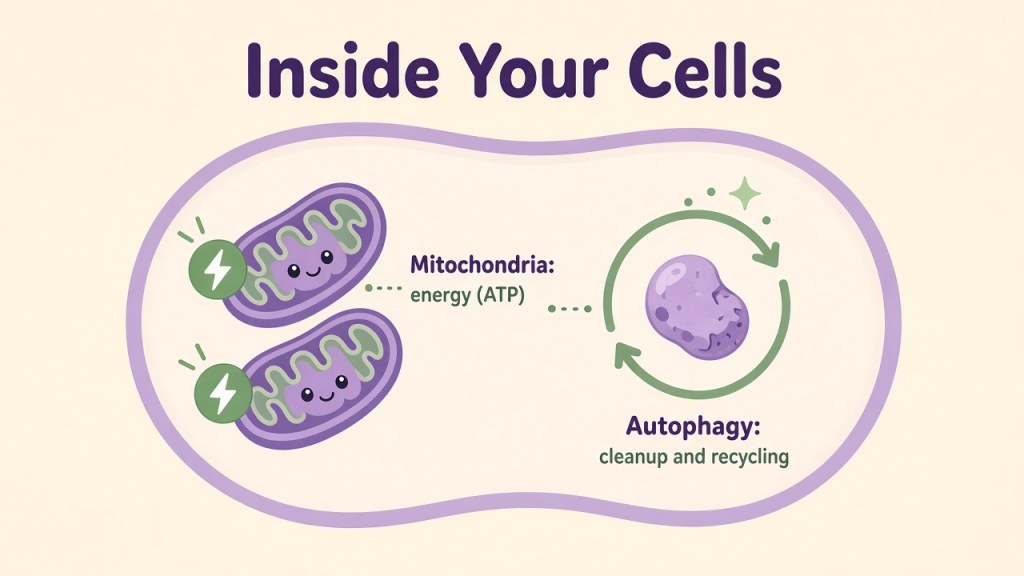
Autophagy literally means “self-eating.” It’s your cells’ recycling program. Worn-out proteins and damaged parts get packaged up, broken down, and reused. When the parts being recycled are mitochondria, it’s called mitophagy.
Mitochondria are the tiny structures inside most of our cells that turn the food we eat and the oxygen we breathe into usable energy (ATP). They also help with cell signaling and deciding when a damaged cell should be retired. Healthy mitochondria and healthy autophagy go hand in hand: you make new mitochondria, and you clean up the tired ones.
Here’s the catch most headlines skip. We can’t easily measure autophagy in a living person. Most of what we know comes from yeast, worms, mice, and cells in a dish. Researchers have only recently developed ways to estimate autophagic “flux” from human blood samples, and those are research tools, not something your doctor can order. So when someone says “autophagy kicks in at hour 16 of a fast,” that’s not a number anyone has measured. Some of these findings may apply to people, but we can’t assume they do.
Evidence-based Strategies to Support Autophagy
Fasting and time-restricted eating (TRE)
In animals, fasting is one of the most reliable ways to ramp up autophagy. In humans, the signal is real but thinner. A small 2019 study of 11 adults found that eating within an early 6-hour window (8 a.m. to 2 p.m.) for four days raised the expression of an autophagy-related gene (LC3A) in blood compared with a 12-hour window. That’s interesting, but it’s a gene marker in blood, not proof of cellular cleanup in your liver or brain. A 2018 review of fasting and calorie restriction came to a similar place: strong animal data, limited direct human data. However, we do know that intermittent fasting or TRE may modestly lower fasting blood sugar, mostly because people tend to eat a bit less. Typical approaches are 16:8 where the person fasts for 16 hours (for example, 8 p.m. to noon) and eats between noon and 8 p.m. Fasting carries risks and ideally should never be attempted without medical clearance or input. I’d skip extended fasting if you’re pregnant, breastfeeding, or trying to conceive, under 18, or have a history of disordered eating. If you take insulin or other glucose-lowering medications for diabetes, fasting can cause dangerous lows, so plan any change with your prescriber.
Exercise
This is my favorite lever because the human data are better and the benefits go well beyond autophagy. In a human study using muscle biopsies, cycling at a higher intensity activated autophagy markers in muscle more than lower-intensity cycling, and it did so whether people were fed or fasted. In other words, movement may matter more than the empty stomach.
Sleep
Autophagy follows a daily rhythm in animals, and studies in rodents show that sleep loss disrupts it. A 2025 review describes the relationship as complex and points out that human evidence is still limited. I’m comfortable saying good sleep supports the conditions for repair. I’m not comfortable saying it “triggers autophagy” in people. Either way, we know now that solid sleep is a strong metabolic lever. A person can eat really well, work out hard, but if they don’t log the necessary zzz’s, achieving whole health will prove to be difficult.
Food choices and dietary patterns
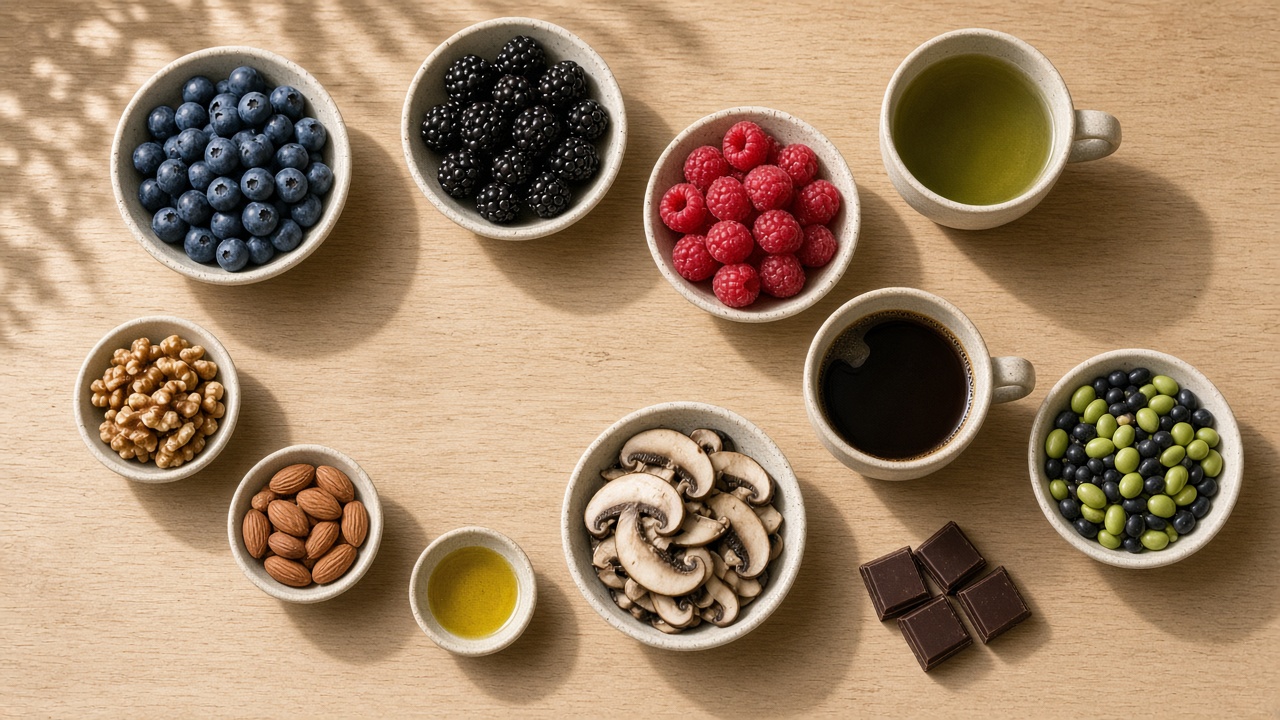
Some compounds found in food, sometimes called “caloric restriction mimetics,” activate autophagy pathways in cells and animals. These include polyphenols (in berries, green tea, coffee, cocoa, olive oil) and spermidine, found in wheat germ, soybeans, legumes, mushrooms, and aged cheese. In a population study from Italy, people who ate more spermidine had lower death rates over about 20 years. That’s observational data, so it can’t prove cause, since spermidine-rich diets tend to be healthier overall. A 2024 study found that fasting raised spermidine levels in human volunteers and that spermidine was needed for fasting’s benefits in animals. Promising, but mostly from model organisms. All of that to say, keep reaching for those fruits and vegetables with deep, dark colors, choose healthy fats and enjoy those warm beverages.
Supplements: Honest Evidence
- Spermidine. The largest trial I found, the SmartAge trial, gave 100 older adults with memory concerns a wheat germ spermidine supplement or placebo for 12 months. It didn’t improve memory or the main secondary outcomes. It was well tolerated, with side effects similar to placebo, but didn’t meet its goals. Human evidence for benefit: weak so far.
- Resveratrol. This phytonutrient is found in grape skins, red wine, peanuts, and some berries. It famously extended life in some animal studies. In people, results are mixed. One well-designed trial gave men high-dose resveratrol for four weeks and found no improvement in insulin sensitivity, metabolism, or body composition. Some meta-analyses of trials show small drops in the inflammation marker CRP, but it’s unclear whether that translates into better health.
- Urolithin A. This is made by gut bacteria from compounds in pomegranates, walnuts, and berries, and it’s now sold as a mitophagy supplement. Small trials in older adults showed changes in mitochondrial gene markers and some improvement in muscle endurance at two months, but not at four months, and no difference in walking distance. Most of the human research on urolithin A has been funded by its maker, Timeline. Therefore, I’d consider the evidence to be early and still building.
- CoQ10 and “mito cocktails.” A Cochrane review found no clear evidence that supplements improve meaningful outcomes even in people with diagnosed mitochondrial disease. However, in people that take statins (cholesterol lowering medication), statins can lower the body’s CoQ10 levels, but overall the evidence doesn’t show that CoQ10 eases statin-related muscle pain. Note that CoQ10 may interact with warfarin (a blood thinner) and insulin.
- NAD+ precursors (like nicotinamide riboside). These raise NAD+ levels in blood and appear safe in the short term, but solid evidence of the touted health benefits in people is still lacking to recommend with confidence. Either way, vitamin B3 (niacin) plays a key role in a number of metabolic processes and adequacy of this B-vitamin is important.
Supplements aren’t regulated like medications, quality varies, and many can interact with prescriptions. Please check with your pharmacist or healthcare team before starting one. Once cleared, be sure to evaluate the supplement beyond the health benefit claims.
- Choose brands with manufacturer testing by a 3rd party. This means the company has sent its products to an independent lab for additional testing to ensure that the recipe in every bottle matches the label and that there aren’t any additional contaminants or ingredients.
- Check the company’s reputation. Choose companies that carry a line of products with strong 3rd party or independent reviews.
- Pay attention to the details. Be sure to examine the supplement facts panel and ingredients. Some products have gluten or other ingredients that may pose risk. Additionally, the inactive ingredients may also carry risk if they interact with your medication or other supplements and may be easy to miss.
- Avoid proprietary blends. A proprietary blend is a secret recipe of ingredients. It allows the manufacturer to tell the consumer what is in the product without telling you how much. Research benefits are tied to specific doses. Therefore, you need to know exactly what’s in one dose to know how much to take and if it’s worth taking it.
Mitochondria: Building a Better Engine
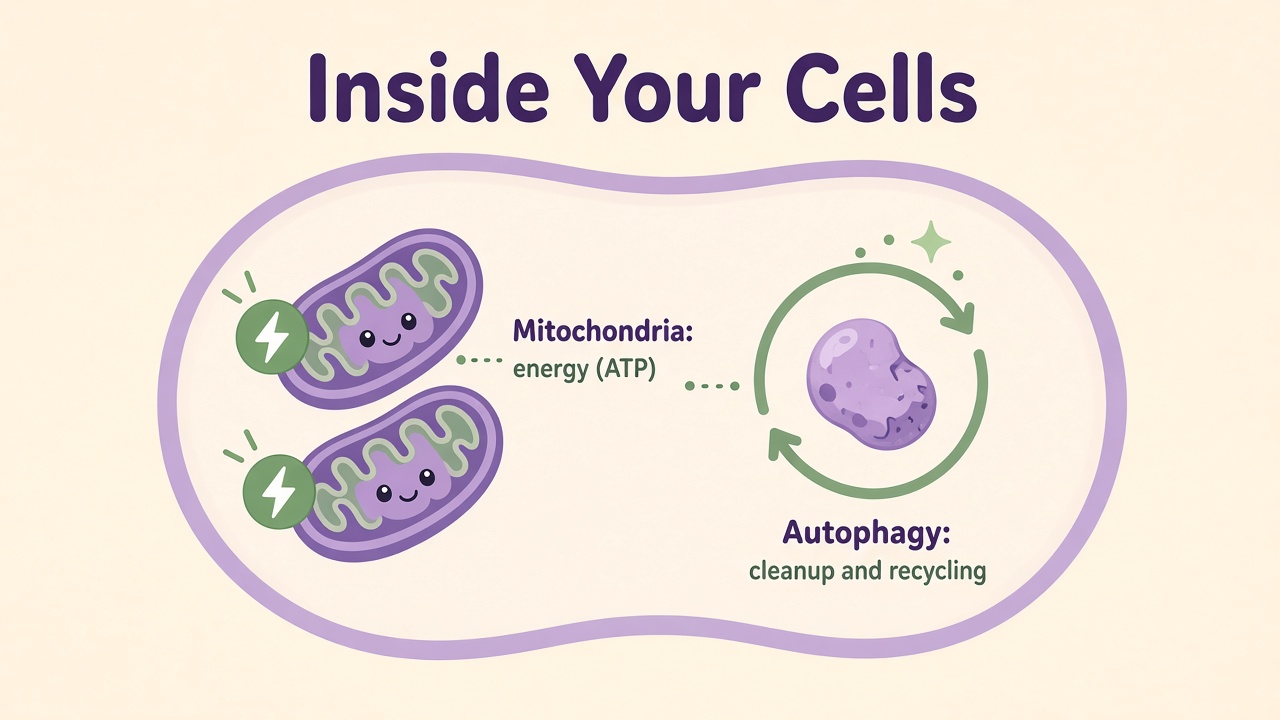
Recall that mitochondria are the energy-producing “factories” in most of our cells. The Mitochondria Method: A Functional Medicine Approach to Lifelong Energy and Health by Dr. Brian Lawenda, a radiation oncologist and integrative oncologist with functional medicine training, frames mitochondria as the root of energy and metabolic health and walks through metabolic flexibility, insulin resistance, gut health, hormones, nutrients, stress and sleep, toxins, and cancer, ending with a personalized plan, supplement guidance, and functional testing.
The book’s focus on insulin resistance, movement, sleep, stress, and eating in sync with your body clock is well grounded. The strongest evidence for supporting mitochondria is exercise. Physical training increases both how many mitochondria your muscles have and how well they work. A review of human studies suggests that training volume tends to drive mitochondrial content, while intensity drives how well they function.
How do we use this evidence to our advantage? It points to two valid styles of exercise that can be mixed to achieve optimal results.
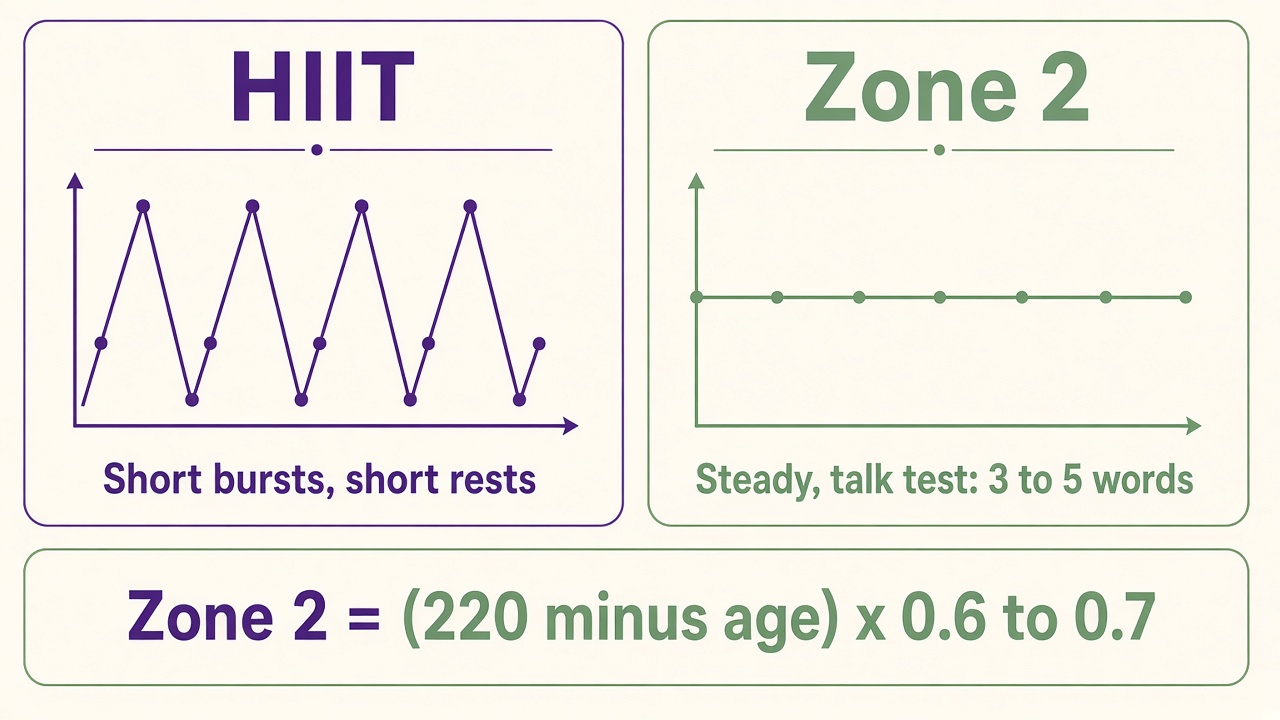
HIIT (High Intensity Interval Training)
In a 12-week trial, high-intensity interval training improved mitochondrial capacity in both younger and older adults, with the biggest relative gains in the older group. This style of exercise uses a circuit of small bursts of intensity followed by short recovery periods. For example, a person would work at a high intensity (top of their heart rate) for 20-60 seconds and then rest for 10-30 seconds. This could look like jogging for 60 seconds and then walking for 30 seconds or doing a calisthenic exercise for 30 seconds and resting for 15 seconds. This can improve VO2 max (your maximal oxygen uptake) and exercise tolerance relatively quickly, partly through mitochondrial changes.
Zone 2 (based on Zone 2 heart rate)
This easy, conversational cardio is wonderful to build a mitochondria base. A 2025 review by exercise physiologists concluded that the evidence doesn’t support zone 2 as the best intensity for mitochondria and that higher intensities matter, especially if your time is limited. Zone 2 is where your body uses the highest share of fat for fuel during the workout, but that doesn’t necessarily mean more fat loss. My take: do mostly what you enjoy, and sprinkle in some harder effort if your body allows.
Zone 2 cardio is a light-to-moderate aerobic exercise performed at 60% to 70% of your maximum heart rate, where you can breathe comfortably and speak in short sentences. You can calculate your Zone 2 by:
- Estimate your max heart rate as 220 minus your age (it’s a rough estimate).
- Then, multiply your Max Heart rate by 0.6 and 0.7 to find your Zone 2 target heart rate range.
- Finally, test it! See if you can pass the “talk test” when your heart rate is in that zone. You’re looking to speak 3 to 5 words at one time.
Where I’m more cautious with the book: supplements and tools like red light therapy are still emerging in human trials, functional mitochondrial tests aren’t standardized for everyday care, and cancer-related claims belong in conversations with your oncology team.
My Practical Fuel-to-Flourish Approach
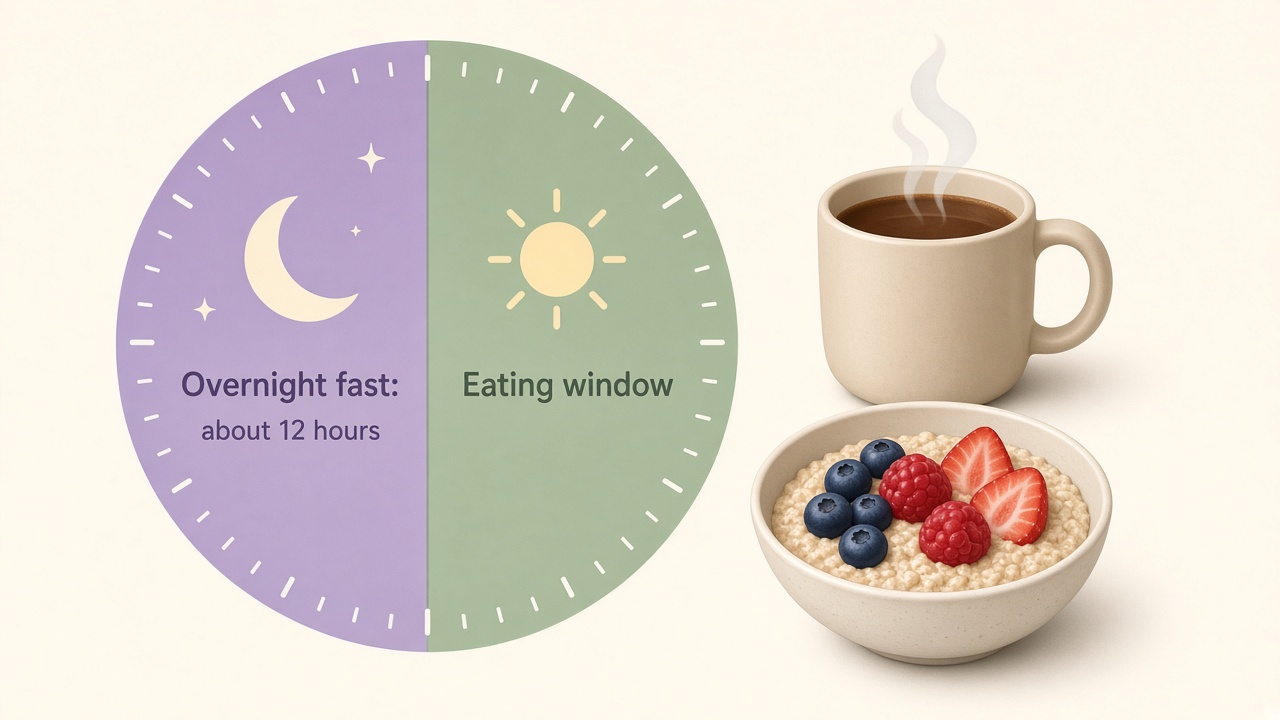
- Keep a gentle overnight fast. About 12 hours is a great place to start. No need to chase autophagy with long fasts.
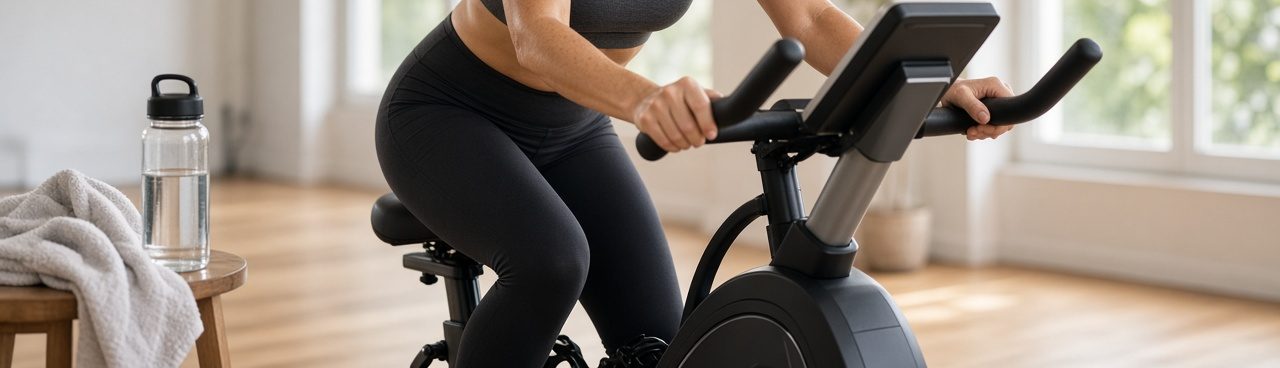
- Move most days, and add some intensity. Brisk walks, a bike ride, or intervals a couple of times a week if your health allows. Aim for at least 150 minutes of moderate activity each week as a start.
- Lift something heavy-ish 2 to 3 times a week. Muscle is where so much of your mitochondrial action lives. Safe resistance training as we age is protective and offers metabolic benefits, too.
- Protect your sleep. A consistent bedtime and an earlier last meal help your body clock.
- Eat the “mimetics” as food. Berries, green tea or coffee, beans, soy, mushrooms, whole grains, olive oil, and nuts have benefits beyond supporting autophagy.
- Fuel enough. Chronic under-eating, especially around exercise training, works against you.
- Be choosy with supplements. Food first, check the details and personal interactions, and look for third-party testing with a seal that shows good manufacturing practices.
Bottom Line
Autophagy and mitochondria are real, fascinating, and worth caring about. But the most reliable tools we have aren’t exotic supplements. They’re movement, sleep, a nourishing plate, and a sensible eating rhythm.
And I’d love to hear from you in the comments: have you tried fasting or zone 2, and how did it feel?
This post is for general education and isn’t individual medical or nutrition advice. Please talk with your care team before changing how you eat, fast, exercise, or supplement, especially if you’re pregnant, breastfeeding, taking glucose-lowering medications or blood thinners, or have a history of disordered eating.
References
- Lawenda B. The Mitochondria Method: A Functional Medicine Approach to Lifelong Energy and Health. Mitochondria Method; June 26, 2025. Hardcover ISBN 9798999363909; paperback ISBN 9798999363916. https://mitochondriamethod.com/books
- Klionsky DJ, Abdel-Aziz AK, Abdelfatah S, et al. Guidelines for the use and interpretation of assays for monitoring autophagy (4th edition). Autophagy. 2021;17(1):1-382. doi:10.1080/15548627.2020.1797280. https://pubmed.ncbi.nlm.nih.gov/33634751/
- Bensalem J, Hattersley KJ, Hein LK, et al. Measurement of autophagic flux in humans: an optimized method for blood samples. Autophagy. 2021;17(10):3238-3255. doi:10.1080/15548627.2020.1846302. https://pubmed.ncbi.nlm.nih.gov/33164641/
- Jamshed H, Beyl RA, Della Manna DL, et al. Early time-restricted feeding improves 24-hour glucose levels and affects markers of the circadian clock, aging, and autophagy in humans. Nutrients. 2019;11(6):1234. doi:10.3390/nu11061234. https://pubmed.ncbi.nlm.nih.gov/31151228/
- Bagherniya M, Butler AE, Barreto GE, Sahebkar A. The effect of fasting or calorie restriction on autophagy induction: a review of the literature. Ageing Res Rev. 2018;47:183-197. doi:10.1016/j.arr.2018.08.004. https://pubmed.ncbi.nlm.nih.gov/30172870/
- Schwalm C, Jamart C, Benoit N, et al. Activation of autophagy in human skeletal muscle is dependent on exercise intensity and AMPK activation. FASEB J. 2015;29(8):3515-3526. doi:10.1096/fj.14-267187. https://faseb.onlinelibrary.wiley.com/doi/full/10.1096/fj.14-267187
- Ullern H, Schnur P, Boccara CN, Knævelsrud H. Rest, repair, repeat: the complex relationship of autophagy and sleep. J Mol Biol. 2025. https://www.sciencedirect.com/science/article/pii/S0022283625002931
- Madeo F, Carmona-Gutierrez D, Hofer SJ, Kroemer G. Caloric restriction mimetics against age-associated disease: targets, mechanisms, and therapeutic potential. Cell Metab. 2019;29(3):592-610. doi:10.1016/j.cmet.2019.01.018. https://pubmed.ncbi.nlm.nih.gov/30840912/
- Kiechl S, Pechlaner R, Willeit P, et al. Higher spermidine intake is linked to lower mortality: a prospective population-based study. Am J Clin Nutr. 2018;108(2):371-380. doi:10.1093/ajcn/nqy102. https://ajcn.nutrition.org/article/S0002-9165(22)02930-6/fulltext
- Hofer SJ, Daskalaki I, Bergmann M, et al. Spermidine is essential for fasting-mediated autophagy and longevity. Nat Cell Biol. 2024;26(9):1571-1584. doi:10.1038/s41556-024-01468-x. https://pmc.ncbi.nlm.nih.gov/articles/PMC11392816/
- Schwarz C, Benson GS, Horn N, et al. Effects of spermidine supplementation on cognition and biomarkers in older adults with subjective cognitive decline: a randomized clinical trial. JAMA Netw Open. 2022;5(5):e2213875. doi:10.1001/jamanetworkopen.2022.13875. https://pmc.ncbi.nlm.nih.gov/articles/PMC9136623/
- Poulsen MM, Vestergaard PF, Clasen BF, et al. High-dose resveratrol supplementation in obese men: an investigator-initiated, randomized, placebo-controlled clinical trial of substrate metabolism, insulin sensitivity, and body composition. Diabetes. 2013;62(4):1186-1195. doi:10.2337/db12-0975. https://pmc.ncbi.nlm.nih.gov/articles/PMC3609591/
- Andreux PA, Blanco-Bose W, Ryu D, et al. The mitophagy activator urolithin A is safe and induces a molecular signature of improved mitochondrial and cellular health in humans. Nat Metab. 2019;1(6):595-603. doi:10.1038/s42255-019-0073-4. https://pubmed.ncbi.nlm.nih.gov/32694802/
- Liu S, D’Amico D, Shankland E, et al. Effect of urolithin A supplementation on muscle endurance and mitochondrial health in older adults: a randomized clinical trial. JAMA Netw Open. 2022;5(1):e2144279. doi:10.1001/jamanetworkopen.2021.44279. https://jamanetwork.com/journals/jamanetworkopen/fullarticle/2788244
- Pfeffer G, Majamaa K, Turnbull DM, Thorburn D, Chinnery PF. Treatment for mitochondrial disorders. Cochrane Database Syst Rev. 2012;(4):CD004426. doi:10.1002/14651858.CD004426.pub3. https://pubmed.ncbi.nlm.nih.gov/22513923/
- National Center for Complementary and Integrative Health. Coenzyme Q10. https://www.nccih.nih.gov/health/coenzyme-q10
- Martens CR, Denman BA, Mazzo MR, et al. Chronic nicotinamide riboside supplementation is well-tolerated and elevates NAD+ in healthy middle-aged and older adults. Nat Commun. 2018;9(1):1286. doi:10.1038/s41467-018-03421-7. https://pubmed.ncbi.nlm.nih.gov/29599478/
- Ganson KT, Cuccolo K, Hallward L, Nagata JM. Intermittent fasting: describing engagement and associations with eating disorder behaviors and psychopathology among Canadian adolescents and young adults. Eat Behav. 2022;47:101681. doi:10.1016/j.eatbeh.2022.101681. https://pubmed.ncbi.nlm.nih.gov/36368052/
- Grajower MM, Horne BD. Clinical management of intermittent fasting in patients with diabetes mellitus. Nutrients. 2019;11(4):873. doi:10.3390/nu11040873. https://pubmed.ncbi.nlm.nih.gov/31003482/
- Granata C, Jamnick NA, Bishop DJ. Training-induced changes in mitochondrial content and respiratory function in human skeletal muscle. Sports Med. 2018;48(8):1809-1828. doi:10.1007/s40279-018-0936-y. https://pubmed.ncbi.nlm.nih.gov/29934848/
- Robinson MM, Dasari S, Konopka AR, et al. Enhanced protein translation underlies improved metabolic and physical adaptations to different exercise training modes in young and old humans. Cell Metab. 2017;25(3):581-592. doi:10.1016/j.cmet.2017.02.009. https://pubmed.ncbi.nlm.nih.gov/28273480/
- Storoschuk KL, Moran-MacDonald A, Gibala MJ, Gurd BJ. Much ado about zone 2: a narrative review assessing the efficacy of zone 2 training for improving mitochondrial capacity and cardiorespiratory fitness in the general population. Sports Med. 2025. doi:10.1007/s40279-025-02261-y. https://link.springer.com/article/10.1007/s40279-025-02261-y
- Liu HY, Eso AA, Cook N, O’Neill HM, Albarqouni L. Meal timing and anthropometric and metabolic outcomes: a systematic review and meta-analysis. JAMA Netw Open. 2024;7(11):e2442163. doi:10.1001/jamanetworkopen.2024.42163. https://pubmed.ncbi.nlm.nih.gov/39485353/
- Gorabi AM, Aslani S, Imani D, Razi B, Sathyapalan T, Sahebkar A. Effect of resveratrol on C-reactive protein: an updated meta-analysis of randomized controlled trials. Phytother Res. 2021;35(12):6754-6767. doi:10.1002/ptr.7262. https://pubmed.ncbi.nlm.nih.gov/34472150/
- U.S. Department of Health and Human Services. Physical Activity Guidelines for Americans. 2nd ed. 2018. https://health.gov/our-work/nutrition-physical-activity/physical-activity-guidelines

