“Should I be eating differently depending on where I am in my cycle?”
I’ve been hearing that question a lot lately. Several of my clients have come in with a book, a podcast episode, or a screenshot and asked for some version of it. Most of them are talking about Dr. Mindy Pelz, whose books Eat Like a Girl and Age Like a Girl have reached a lot of women.
I get why it resonates. So many women have spent years being told their bodies are a problem to fix. Eat less, move more, push through. Then someone comes along and says, your body has a rhythm, and you’re allowed to work with it instead of against it. That’s a powerful message and one I agree with.
So, I got curious. I read up on her framework, dug into the research, and thought hard about what I actually see in practice. This is my take describing what I love, where I’m more cautious, and how I’m helping clients use these ideas in a way that’s doable.
What’s the Big Idea?
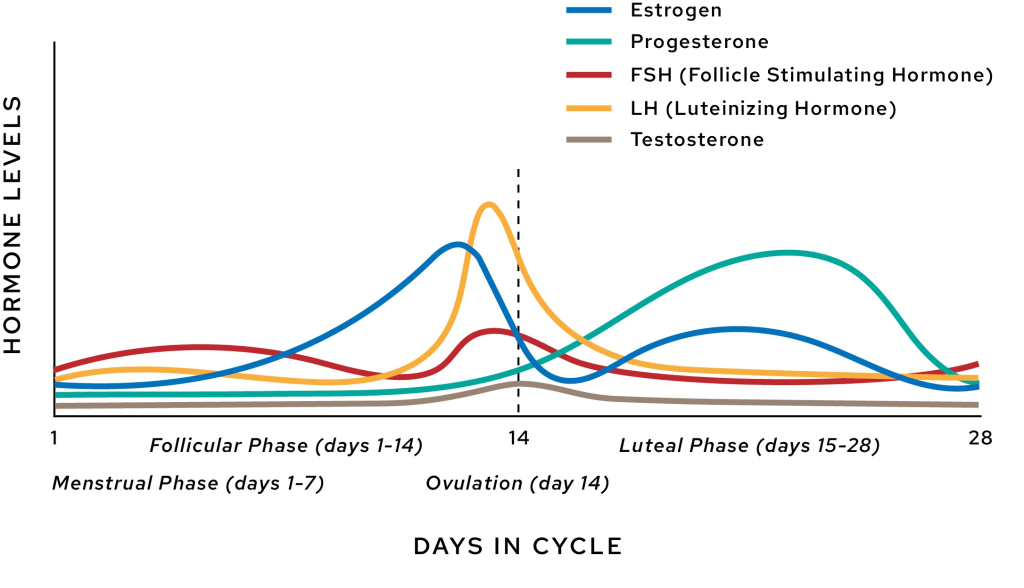
Dr. Mindy Pelz is a chiropractor (DC) and functional health author. She’s best known for her fasting work and hosts The Resetter Podcast. Her central idea is that women aren’t small men. Our hormones shift across the month and across our lifespan, so a one-size-fits-all approach to fasting and food doesn’t serve us well. Her fasting framework, which she calls the Fasting Cycle, is based on a typical 28-day cycle and based on a female hormone cycle,
- Power Phase 1 (about days 1–10): Starts on the first day of your period. She describes this as a low-hormone window when estrogen is building, and when she thinks “ketobiotic” eating thrives. This is a meal pattern with < 50 grams of net carbs a day from “nature’s carbs” only (no breads, pastas, or desserts), healthy fat at every meal, and a protein target.
- Manifestation Phase (about days 11–15): This is the four days around ovulation when estrogen and testosterone peak. She recommends leaning into “hormone feasting” foods, plus foods that support the liver and gut.
- Power Phase 2 (about days 16–19): A short window after ovulation when she says ketobiotic eating and an emphasis on cruciferous veggies and fermented foods to support estrogen metabolism are key.
- Nurture Phase (about day 20 until your period): Progesterone takes center stage. Her reasoning is that progesterone needs low cortisol and enough blood sugar to thrive. So she recommends “hormone feasting” or eating more whole-food carbohydrates with more than 150 grams of net carbs a day, from fiber-rich vegetables, fruits, squashes, and potatoes, plus a wide variety of fiber, proteins, and fermented foods.
For perimenopause and beyond (Age Like a Girl): Pelz frames menopause as a brain and identity “reset” instead of a decline. She emphasizes how falling estrogen affects brain chemistry, which she links to brain fog, mood changes, and low motivation. In interviews about the book, she’s described a modified approach that includes a daily 13–15 hour fast as a baseline for midlife women. It also includes avoiding fasting the week before a period, or when spotting starts, during perimenopause, with more carbohydrates at those times. She’s said she sees longer fasts as more useful for the postmenopausal brain than the perimenopausal one.
What do I make of it?
I agree with quite a bit.
Your cycle and your hormones matter. For decades, a lot of nutrition and exercise research simply left women out or treated our cycles as “noise.” Pelz is right that women deserve guidance that accounts for our biology.
Your appetite really can change across the month. This one has research behind it. A 2025 meta-analysis found women ate about 168 more calories a day, on average, in the luteal phase (the second half of the cycle) than in the follicular phase. Resting metabolism also appears to run slightly higher in the luteal phase, so when Pelz says to stop fighting your hunger the week before your period, I’m with her. That isn’t a willpower failure.
Easing up on fasting before your period makes sense to me. I don’t think the evidence proves the cortisol-and-progesterone explanation. But we know hunger and energy needs tend to rise, sleep and mood can wobble, and many women simply feel worse when they restrict during that week. Eating more, and more regularly, then is a reasonable and kind default.
Fasting is a tool, not a rule. I support time-restricted eating as an option for some women. Pelz has also pushed back on the “skip breakfast and white-knuckle it” version of fasting. She talks about choosing an eating window that fits your life. I agree.
The plate itself is solid. Lots of plant diversity, fiber, fermented foods, cruciferous vegetables, whole-food carbohydrates, and quality protein. That’s Food is Medicine at its best. If you read my last post on estrogen and the midlife body, you know how I feel about broccoli. Her “Foods That Support Progesterone” list reads a lot like my grocery list: sweet potatoes, lentils, beans, chickpeas, quinoa, salmon, eggs, leafy greens, broccoli, Brussels sprouts, pumpkin seeds, and flaxseed. To be clear, these foods aren’t proven to raise progesterone. I just love them as a nutrient-dense way to fill your plate.
Strength training and daylight eating. The Age Like a Girl companion recommends full-body strength training at least 2 to 3 times a week, with progressive overload and recovery days, and offers four levels of weekly movement plans you can move between depending on how you feel. Her food-timing principles (a bigger midday meal, finishing dinner earlier, a few hours between your last bite and bedtime) also line up nicely with what we’re learning about eating in sync with our body clock. Yes and yes.
Where I’m More Cautious
This is where I want to be honest and fair. Pelz has helped a lot of women feel seen. But some of what she recommends goes further than the research does right now.
Hormones change across the cycle. That part isn’t in question. The question is whether eating a specific way in each phase (low-carb here, higher-carb there) leads to better health outcomes. I couldn’t find controlled trials testing that kind of phase-by-phase meal plan but it doesn’t mean women aren’t benefiting from this style of eating.
What has been studied is how time-restricted eating (TRE) affects sex hormones. In women with obesity, an 8-week study using a very short 4–6 hour eating window found no change in testosterone or SHBG. DHEA went down. In postmenopausal women, estrogen and progesterone didn’t change. A 12-month trial of an 8-hour eating window found no changes in sex hormones in premenopausal or postmenopausal women. That’s reassuring for moderate TRE. But those studies didn’t test cycle-synced fasting, and they didn’t measure progesterone in women who were still cycling. So we don’t yet know whether her phase-specific rules improve anything.
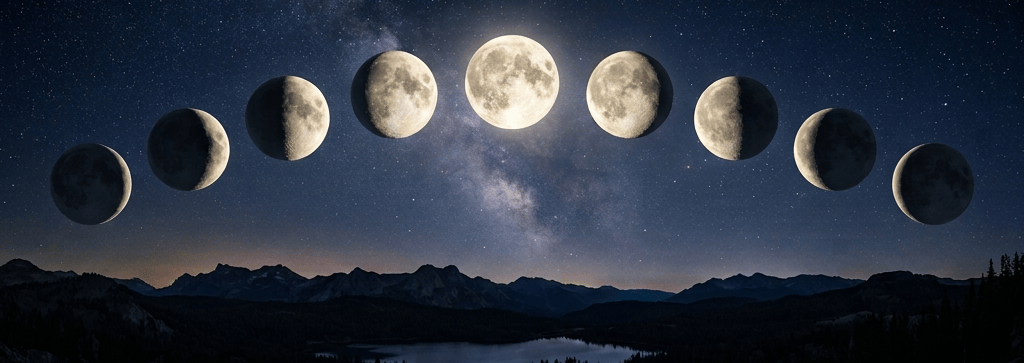
The moon-based schedule for women without a cycle falls into the same bucket for me. I’m not aware of evidence that timing your fasts to the moon matters biologically. That said, a calendar is a calendar. If it helps you remember to build in “nurture” weeks of eating more, that’s not a bad thing.
My Practical Fuel-to-Flourish Approach
Here’s what I do with clients who want to eat more in tune with their cycle. It’s simple on purpose.
1. Start with a gentle overnight fast. For most people who want to try it, 12 hours overnight is plenty. For example, finishing dinner at 7 p.m. and eating breakfast at 7 a.m. Many of my clients already do this without calling it fasting.
2. Break your fast with protein and plants. Think eggs and veggies, Greek yogurt with berries and chia and ground flax seeds. Leftovers count too. Pair protein with fiber, and add carbohydrates if you’re training that day.
3. Ease up in the second half of your cycle. In the week or so before your period and during the first days of bleeding, eat a little more and add whole-food carbs squash, potatoes, oats, fruit, beans). This is a “nurture” to nourish idea.
4. Fuel around training. If you’re working out hard, especially in the morning, eat before or soon after. Don’t fast through heavy training days.
5. In perimenopause and menopause, protect muscle and sleep first. Protein at each meal (30 grams or less), routine strength training, fiber for your gut, and a consistent eating rhythm. If a shorter overnight fast helps your energy and evening snacking, great. If it makes your sleep or mood worse, it’s not the right tool for you right now.
6. Track how you feel, not just what you eat. For a couple of cycles, jot down your cycle day, energy, hunger, sleep, mood, digestion, and workouts. Patterns are your data. That’s the most useful part of cycle awareness, and it’s free.
7. Keep the plate diverse. Cruciferous veggies, colorful plants, beans, nuts and seeds, fermented foods when tolerated, and quality proteins. Every phase. No phase is a “no carbs allowed” zone.
The goal isn’t perfection. It’s a pattern that moves you from fuel to flourish.
The Bottom Line
I’m grateful Dr. Pelz has gotten so many women talking about their cycles and their hormones. I share her belief that women deserve approaches built for women’s bodies. I’m with her on the nourishing plate and the idea of easing up before your period.
Your body is always giving you information. Get curious about it. Notice when you feel strong, when you’re hungrier, and when you need more rest. Then bring that curiosity to your care team. That’s where real, personal, whole-person care begins.
This post is for general education and isn’t individual medical or individualized nutrition advice. Please talk with your care team before changing how you eat or fast, especially if you’re pregnant, breastfeeding, taking glucose-lowering medications, or have a history of disordered eating.
Sources (21)
- Pelz M. Eat Like a Girl: 100+ Delicious Recipes to Balance Hormones, Boost Energy, and Burn Fat. Hay House; October 22, 2024. Publisher page: https://www.penguinrandomhouse.com/books/767709/eat-like-a-girl-by-dr-mindy-pelz/
- Pelz M. Age Like a Girl: How Menopause Rewires Your Brain for Mental Clarity, Increased Confidence, and Renewed Energy. Hay House; December 16, 2025. Publisher page: https://www.hayhouse.com/age-like-a-girl-hardcover
- Pelz M. Eat Like a Girl: Audiobook Supplemental Material. Hay House LLC; 2024. PDF companion to the Eat Like a Girl audiobook (176 pages of charts, food lists, and recipes). Provided by the author’s publisher with the audiobook; no public URL.
- Pelz M. Age Like a Girl: Audiobook Supplemental Material. Hay House LLC; 2025. PDF companion to the Age Like a Girl audiobook (103 pages of charts, checklists, protocols, and references). Provided by the author’s publisher with the audiobook; no public URL.
- Tucker JAL, McCarthy SF, Bornath DPD, Khoja JS, Hazell TJ. The effect of the menstrual cycle on energy intake: a systematic review and meta-analysis. Nutr Rev. 2025;83(3):e866–e876. doi:10.1093/nutrit/nuae093. https://pubmed.ncbi.nlm.nih.gov/39008822/
- Benton MJ, Hutchins AM, Dawes JJ. Effect of menstrual cycle on resting metabolism: a systematic review and meta-analysis. PLoS One. 2020;15(7):e0236025. doi:10.1371/journal.pone.0236025. https://pubmed.ncbi.nlm.nih.gov/32658929/
- Fast Like a Girl, Eat Like a Girl, and Age Like a Girl with Dr. Mindy Pelz [podcast episode]. https://exa.ai/library/podcast/7d845q75qr6/episode/jhcg0hkmshd
- McNulty KL, Elliott-Sale KJ, Dolan E, et al. The effects of menstrual cycle phase on exercise performance in eumenorrheic women: a systematic review and meta-analysis. Sports Med. 2020;50(10):1813–1827. doi:10.1007/s40279-020-01319-3. https://pubmed.ncbi.nlm.nih.gov/32661839/
- Reiches MW, DiMarco M, Lee KMN, et al. Does menstrual cycle tracking enhance female athlete health and performance? Evaluating five implicit assumptions of an emerging paradigm. Soc Sci Med. 2026;408:119790. doi:10.1016/j.socscimed.2026.119790. https://pubmed.ncbi.nlm.nih.gov/42731442/
- Kalam F, Akasheh RT, Cienfuegos S, et al. Effect of time-restricted eating on sex hormone levels in premenopausal and postmenopausal females. Obesity (Silver Spring). 2023;31(Suppl 1):57–62. doi:10.1002/oby.23562. https://pubmed.ncbi.nlm.nih.gov/36203273/
- Lin S, Cienfuegos S, Ezpeleta M, et al. Effect of time restricted eating versus daily calorie restriction on sex hormones in males and females with obesity. Eur J Clin Nutr. 2024;78(9):814–817. doi:10.1038/s41430-024-01461-5. https://pubmed.ncbi.nlm.nih.gov/38866976/
- Bagherniya M, Butler AE, Barreto GE, Sahebkar A. The effect of fasting or calorie restriction on autophagy induction: a review of the literature. Ageing Res Rev. 2018;47:183–197. doi:10.1016/j.arr.2018.08.004. https://pubmed.ncbi.nlm.nih.gov/30172870/
- Jamshed H, Beyl RA, Della Manna DL, et al. Early time-restricted feeding improves 24-hour glucose levels and affects markers of the circadian clock, aging, and autophagy in humans. Nutrients. 2019;11(6):1234. doi:10.3390/nu11061234. https://pubmed.ncbi.nlm.nih.gov/31151228/
- Pietzner M, Uluvar B, Kolnes KJ, et al. Systemic proteome adaptions to 7-day complete caloric restriction in humans. Nat Metab. 2024;6(4):764–777. doi:10.1038/s42255-024-01008-9. https://pubmed.ncbi.nlm.nih.gov/38429390/
- Trepanowski JF, Kroeger CM, Barnosky A, et al. Effect of alternate-day fasting on weight loss, weight maintenance, and cardioprotection among metabolically healthy obese adults: a randomized clinical trial. JAMA Intern Med. 2017;177(7):930–938. doi:10.1001/jamainternmed.2017.0936. https://pubmed.ncbi.nlm.nih.gov/28459931/
- Finnell JS, Saul BC, Goldhamer AC, Myers TR. Is fasting safe? A chart review of adverse events during medically supervised, water-only fasting. BMC Complement Altern Med. 2018;18(1):67. doi:10.1186/s12906-018-2136-6. https://pubmed.ncbi.nlm.nih.gov/29458369/
- Lowe DA, Wu N, Rohdin-Bibby L, et al. Effects of time-restricted eating on weight loss and other metabolic parameters in women and men with overweight and obesity: the TREAT randomized clinical trial. JAMA Intern Med. 2020;180(11):1491–1499. doi:10.1001/jamainternmed.2020.4153. https://pubmed.ncbi.nlm.nih.gov/32986097/
- Loucks AB, Thuma JR. Luteinizing hormone pulsatility is disrupted at a threshold of energy availability in regularly menstruating women. J Clin Endocrinol Metab. 2003;88(1):297–311. doi:10.1210/jc.2002-020369. https://pubmed.ncbi.nlm.nih.gov/12519869/
- Mountjoy M, Ackerman KE, Bailey DM, et al. 2023 International Olympic Committee’s (IOC) consensus statement on Relative Energy Deficiency in Sport (REDs). Br J Sports Med. 2023;57(17):1073–1097. doi:10.1136/bjsports-2023-106994. https://pubmed.ncbi.nlm.nih.gov/37752011/
- Ganson KT, Cuccolo K, Hallward L, Nagata JM. Intermittent fasting: describing engagement and associations with eating disorder behaviors and psychopathology among Canadian adolescents and young adults. Eat Behav. 2022;47:101681. doi:10.1016/j.eatbeh.2022.101681. https://pubmed.ncbi.nlm.nih.gov/36368052/
- Grajower MM, Horne BD. Clinical management of intermittent fasting in patients with diabetes mellitus. Nutrients. 2019;11(4):873. doi:10.3390/nu11040873. https://pubmed.ncbi.nlm.nih.gov/31003482/


Comments
One response to “Eating With Your Cycle: My Take on Eat Like a Girl and Age Like a Girl”
[…] my last post, Eating With Your Cycle, I started to wonder about the “why” behind fasting. Autophagy. Mitochondria reset. […]