

Why Your Sleep Changes and How to Reset Your Rhythm
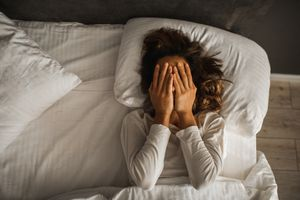
You’re tired. You go to bed exhausted. And then… your brain decides it’s time to think about everything you’ve ever done since 1997. Or maybe you fall asleep just fine but wake up at 2:47 a.m. wide awake every single night. Maybe you’re suddenly waking hot. Maybe your afternoon coffee that never used to bother you now seems to keep you awake. If this sounds familiar, you’re not imagining it.
Sleep can change dramatically during midlife, particularly during periods of hormonal transition. Fluctuations in estrogen, testosterone and progesterone can influence sleep, while hot flashes and night sweats can further fragment the night. But hormones aren’t the whole story.
Your sleep is also governed by a remarkably sophisticated biological clock and that clock is constantly taking cues from light, food, movement, caffeine, alcohol, temperature and your daily routines. The good news? You don’t necessarily need a perfect bedtime routine. Sometimes, the most powerful intervention is simply giving your body better signals.
Your Two Sleep Systems
Sleep is influenced by two major biological processes.
Process 1: Sleep pressure
Think of this as your body’s sleep drive. The longer you’re awake, the more sleep pressure builds. Adenosine is one of the molecules involved in this process. It’s a natural chemical your brain makes that slowly builds up while you’re awake and acts like a “time to get sleepy” signal. This is part of why you become increasingly sleepy as the day goes on and it’s one reason why exercise, activity and avoiding late-day naps can support nighttime sleep.
Process 2: Your circadian rhythm
Your circadian rhythm is your body’s approximate 24-hour timing system. It helps coordinate:
- Sleep and wake cycles
- Melatonin production
- Cortisol rhythms
- Body temperature
- Hormone release
- Metabolism
- Alertness
- Appetite and digestion
And one of its most important inputs is light. Your brain is constantly asking. Is it daytime—or nighttime?
The answer helps determine whether your body should be promoting alertness or preparing for sleep. This is where midlife gets interesting. Because hormonal changes, evening light exposure, caffeine, alcohol and our modern tech-driven lifestyles can all interfere with those signals.
Hormones: When Your Internal Clock Gets a Little Noisy
During mid-life, estrogen, testosterone and progesterone fluctuate and eventually decline. These hormones are associated with sleep regulation, and changes are associated with increased sleep disturbance. In other words, sometimes the problem isn’t that you don’t know how to sleep. Your physiology has changed. This is one reason why midlife sleep problems deserve more than the advice to “just practice better sleep hygiene.”
What can you do?
Start by identifying what kind of sleep disruption you’re experiencing.
Are you:
- Having trouble falling asleep?
- Waking repeatedly?
- Waking too early?
- Waking hot or sweaty?
- Experiencing restless legs?
- Snoring or waking gasping?
- Feeling exhausted despite adequate time in bed?
Persistent insomnia, loud snoring, witnessed breathing pauses or significant daytime sleepiness deserve evaluation rather than simply adding supplements for relaxation. Other symptoms are clues to what may be altering your sleep systems.
Morning Light: Your Circadian Rhythm’s Reset Button
Here’s one of my favorite sleep strategies because it’s completely free: Get outside in the morning.
Your circadian system uses light as one of its strongest environmental signals. Morning light helps anchor your biological clock and tells your brain: “It’s morning, Let’s go!” That signal then helps your body establish a stronger distinction between daytime alertness and nighttime sleepiness.
Try this within the first hour of waking:
- Step outside
- Get natural daylight into your eyes
- Spend 10–30 minutes outdoors
- Pair it with a walk, coffee, journaling or simply sitting outside
The goal is simply to expose yourself to outdoor daylight. Even an overcast morning is generally brighter than typical indoor lighting. And if you can combine morning light with movement? Even better.
For many of us, winter is right around the corner and morning light may not be possible. Instead, try a Happy Light. HappyLights and other certified light therapy lamps are designed to mimic natural sunlight while filtering out harmful radiation. A standard household light bulb is simply not bright enough to trigger the biological changes needed to improve your mood, energy, and sleep. A standard indoor light bulb delivers roughly 300 to 500 lux, which is far too weak to impact your biological clock. You would be looking for a light intensity of 10,000 lux.
Blue Light: Screen time matters
You’ve probably heard that blue light from your phone, TV or computer monitor is “destroying your sleep.” That’s a little too simplistic. The bigger issue is bright light exposure at the wrong time, particularly in the evening. Short-wavelength blue light can disrupt the circadian rhythm and suppress melatonin. What you’re viewing matters, too. A relaxing TV show is not the same as scrolling through a global news feed or answering work emails. Your brain doesn’t always interpret “bedtime” as bedtime if you’re still solving problems.
Try a “light sunset.”
About 1–2 hours before bed:
- Dim the lights
- Reduce unnecessary screen time
- Finish work and email
- Dim the lights in your home
- Read
- Stretch
- Listen to music
Choose a few of these to gradually tell your nervous system that the day is ending.
What About Red Light?
Red and amber light have longer wavelengths and generally have less effect on the circadian system than bright, blue-enriched light. That makes dim red or amber lighting a reasonable choice in the evening. But that doesn’t mean every red-light therapy device is a proven sleep treatment.
Caffeine: It May Be Hanging Around Longer Than You Think
Here’s a midlife sleep experiment worth trying. Move your caffeine cutoff earlier. Caffeine blocks adenosine receptors, reducing the sensation of sleepiness. That’s useful at 2 p.m. but not so useful at 10 p.m. And caffeine can have a surprisingly long effect. In a controlled study, 400 mg of caffeine consumed even six hours before bedtime significantly disrupted sleep. That doesn’t mean everyone needs to eliminate afternoon coffee; Caffeine sensitivity varies considerably. Instead, run your own experiment.
Try this for two weeks: If you normally drink caffeine in the afternoon, move your final caffeinated beverage earlier.
For example:
- Morning: Coffee
- Late morning: Coffee, if desired
- After lunch: Switch to decaf, herbal tea or water
And remember that caffeine isn’t just coffee.
It can also come from:
- Tea
- Energy drinks
- Pre-workout products
- Chocolate
- Some medications and supplements
Alcohol: The Sleepy Feeling Is Not the Same as Better Sleep
This one can be tough because alcohol can make you feel relaxed. You may even fall asleep faster. But falling asleep faster isn’t the same thing as getting restorative sleep. Research shows that alcohol can alter sleep architecture, including reducing and delaying REM sleep, and can increase sleep fragmentation particularly later in the night.
That familiar pattern of “I fell asleep great…then woke up at 2 or 3 a.m.” may not be entirely coincidental. And alcohol can be particularly problematic if you’re already experiencing hot flashes, night sweats or sleep-disordered breathing.
If you drink alcohol, experiment with:
- Smaller portions
- Alcohol earlier in the evening rather than immediately before bed
- Alcohol-free nights during the week
- A two-week alcohol-free experiment if you’re curious about its impact
You don’t have to make this a moral issue. Just make it an experiment. What happens to your sleep when alcohol isn’t part of the equation?
A sleep tracker can be interesting. But how you feel the next morning matters more.
Magnesium: Worth Considering but Not a Magic Sleep Pill
Magnesium is another popular sleep strategy. And there’s a biological rationale for why magnesium could influence sleep, including its role in nervous system function. Magnesium may be worth considering, particularly when your intake from food is inadequate, but it shouldn’t replace the fundamentals of sleep and circadian health. Food first is always a good place to start.
Magnesium-rich foods include:
- Leafy greens
- Nuts and seeds
- Beans and legumes
- Whole grains
- Avocado
- Dark chocolate
If considering a supplement, discuss the appropriate form and dose with your healthcare professional, particularly if you have kidney disease or take medications that could interact with magnesium. And remember: more isn’t better. High supplemental doses can cause diarrhea, nausea and abdominal cramping. But, at the right dose you can treat nervous system and digestive distress in one swing.
Your Midlife Sleep Reset
Rather than trying to change everything at once, start with the signals that have the biggest influence on your circadian rhythm.
MORNING
- Get outside soon after waking
- Move your body
- Keep your wake time relatively consistent
- Enjoy caffeine earlier in the day
AFTERNOON
- Consider your caffeine cutoff
- Stay physically active to treat high cortisol that may be disrupting sleep
- Avoid long or late naps
EVENING
- Start dimming the lights
- Reduce bright screens 1 hour before bed
- Choose warm, dim or red/amber lighting
- Eat a satisfying dinner that is not too heavy, not too late
- Limit alcohol
- Begin a predictable wind-down routine
NIGHT
- Keep your bedroom cool and comfortable
- Make the room dark or wear a sleeping mask
- Keep stimulating technology out of bed and ideally out of your bedroom

Think of Sleep as a 24-Hour Practice
Here’s the mindset shift: Sleep doesn’t begin when your head hits the pillow. Your sleep tonight is influenced by what you do this morning.
- The light you see.
- The movement you get.
- The caffeine you drink.
- The food and alcohol you consume.
- The stress you carry.
- The light you expose yourself to after sunset.
- And the consistency of your daily rhythm.
Midlife may change the rules of sleep but it doesn’t mean you’re destined to sleep poorly. Instead of fighting your body, start giving it clearer signals. It’s simply learning to communicate with your biology again.
Fuel your day. Dim your night. And give your body a rhythm it can trust.
Sources (9)
- Baker FC, de Zambotti M, Colrain IM, Bei B. Sleep problems during the menopausal transition: prevalence, impact, and management challenges. Nature and Science of Sleep. 2018;10:73–95. doi:10.2147/NSS.S125807. https://pmc.ncbi.nlm.nih.gov/articles/PMC5810528/
- Reichert CF, Deboer T, Landolt HP. Adenosine, caffeine, and sleep–wake regulation: state of the science and perspectives. Journal of Sleep Research. 2022;31(4):e13597. doi:10.1111/jsr.13597. https://pmc.ncbi.nlm.nih.gov/articles/PMC9541543/
- Gooley JJ, Chamberlain K, Smith KA, et al. Exposure to room light before bedtime suppresses melatonin onset and shortens melatonin duration in humans. Journal of Clinical Endocrinology & Metabolism. 2011;96(3):E463–E472. doi:10.1210/jc.2010-2098. https://pmc.ncbi.nlm.nih.gov/articles/PMC3047226/
- Chang AM, Aeschbach D, Duffy JF, Czeisler CA. Evening use of light-emitting eReaders negatively affects sleep, circadian timing, and next-morning alertness. Proceedings of the National Academy of Sciences. 2015;112(4):1232–1237. doi:10.1073/pnas.1418490112. https://pmc.ncbi.nlm.nih.gov/articles/PMC4313820/
- Drake C, Roehrs T, Shambroom J, Roth T. Caffeine effects on sleep taken 0, 3, or 6 hours before going to bed. Journal of Clinical Sleep Medicine. 2013;9(11):1195–1200. doi:10.5664/jcsm.3170. https://pmc.ncbi.nlm.nih.gov/articles/PMC3805807/
- Ebrahim IO, Shapiro CM, Williams AJ, Fenwick PB. Alcohol and sleep I: effects on normal sleep. Alcoholism: Clinical and Experimental Research. 2013;37(4):539–549. doi:10.1111/acer.12006. https://pubmed.ncbi.nlm.nih.gov/23347102/
- Crispim CA, Zimberg IZ, dos Reis BG, et al. Relationship between food intake and sleep pattern in healthy individuals. Journal of Clinical Sleep Medicine. 2011;7(6):659–664. doi:10.5664/jcsm.1476. https://pmc.ncbi.nlm.nih.gov/articles/PMC3227713/
- Arab A, Rafie N, Amani R, Shirani F. The role of magnesium in sleep health: a systematic review of available literature. Biological Trace Element Research. 2023;201(1):121–128. doi:10.1007/s12011-022-03162-1. https://pubmed.ncbi.nlm.nih.gov/35184264/
- Mah J, Pitre T. Oral magnesium supplementation for insomnia in older adults: a systematic review & meta-analysis. BMC Complementary Medicine and Therapies. 2021;21(1):125. doi:10.1186/s12906-021-03297-z. https://pmc.ncbi.nlm.nih.gov/articles/PMC8053283/National Center for Complementary and Integrative Health. Sleep Disorders and Complementary Health Approaches: Usefulness and Safety. NCCIH. Accessed October 5, 2026. https://www.nccih.nih.gov/health/sleep-disorders-and-complementary-health-approaches

