


“Brain fog” is not a medical diagnosis but is a well-accepted description of how many of us navigate daily life.
- You walk into a room and forget why you’re there.
- You know someone’s name but it’s hiding somewhere in the back of your brain.
- You reread the same email or phone number three times before it sticks.
- You sit down to work and suddenly realize you have opened six tabs, answered two texts, checked the weather, and accomplished absolutely nothing.
If this sounds familiar, you may also wonder, “Is this just what getting older feels like?”
Not necessarily. While not a clinical condition, brain fog is a collection of symptoms including forgetfulness, difficulty concentrating, slower thinking, trouble finding words, mental fatigue, and feeling like your brain is simply not operating at its usual speed.
Brain fog is especially common during midlife. For women, the menopause transition can bring dramatic changes in hormones, sleep, mood, and cognition. For men, gradual changes in testosterone, sleep, metabolic health, and body composition can contribute to similar symptoms.
But hormones are only part of the story. Your brain is an organ. And like every other organ, it needs fuel, oxygen, hormones, sleep, movement, nutrients, and a healthy environment to do its job. So before you decide that your brain is simply “getting old,” let’s look at what might actually be happening.
What exactly is brain fog?
Brain fog can look different from person to person and it does not automatically mean your brain is deteriorating. Some changes in memory and processing speed are a normal part of aging. But new or bothersome cognitive symptoms can also be caused – or amplified – by how we treat our body.
So, hang up the excuse that “I’m just getting old” and get curious by asking yourself, “What changed?”
Your brain is an energy-hungry organ
Your brain may only represent a small portion of your body, but it uses a remarkable amount of your energy. Every thought, memory, movement, and decision requires communication between brain cells. Think of your brain like a very sophisticated electrical network. For the lights to stay on, it needs:
- Fuel (Glucose)
- Oxygen
- Healthy blood vessels
- Micronutrients
- Sleep
- Cooperative chemical messengers (hormones)
Around age 40 and beyond, several systems can begin changing at the same time which leads to cascading impacts on:
- Body composition,
- Metabolism,
- Sleep, and
- Stress.
Your brain feels the ripple effects of these changes and they can be compounded by:
- Blood pressure and cholesterol rising,
- Blood sugar regulation changing,
- Nutrient deficiencies, and
- Physical activity.
Women: When hormones, sleep, and the brain collide
For many women, brain fog becomes particularly noticeable during perimenopause and menopause. And there is a biological reason. Estrogen is not only a reproductive hormone, it also acts in the brain and is involved in:
- memory
- attention
- learning
- mood
- sleep
- temperature regulation
- communication between brain cells
During perimenopause, estrogen doesn’t simply decline in a straight line. It can rise and fall more like a rollercoaster than rolling hills. Research shows that cognitive symptoms – like brain fog – are common during the menopause transition.
We know that perimenopause also impacts sleep. Late perimenopause is where the vasomotor symptoms show up (Hot flashes, night sweats, anxiety, changing sleep patterns, and nighttime awakenings) and all interfere with restorative sleep. Sleep is not simply “downtime” for the body. During sleep, the brain is actively involved in memory processing and restoration.
Men: Don’t blame everything on testosterone
Men experience a different hormonal pattern. Testosterone generally declines gradually with age rather than undergoing a menopause-like transition. Low testosterone can occur alongside symptoms such as:
- Fatigue
- Reduced motivation
- Decreased muscle mass
- Reduced exercise capacity
- Lower libido
- Mood changes
- Difficulty concentrating
Testosterone receptors are also found in the brain, and testosterone can influence brain signaling. But Brain fog does not equal low testosterone. Studies have found associations between testosterone levels and cognitive performance in some groups of men, but clinical trials have not consistently shown that testosterone treatment improves memory or cognition. In one large randomized trial of older men with low testosterone and memory complaints, testosterone treatment did not improve memory or other measured cognitive functions after one year. That means a man experiencing brain fog shouldn’t automatically reach for testosterone. Instead, we look at the whole system.
While there are hormonal clues, disrupted sleep for men from snoring, sleep apnea or metabolic distress can also contribute to interrupted evening rest and respite.
The Iron Connection: When Your Brain Isn’t Getting What It Needs
Iron is not just about making red blood cells. Your body uses iron to help transport oxygen and support energy production. It also plays a role in normal brain function. This makes iron deficiency an important consideration when someone has:
- Fatigue
- Brain fog
- Poor concentration
- Reduced exercise tolerance
- Headaches
- Hair loss
- Restless legs
- Shortness of breath
Women who are still menstruating have an obvious potential source of iron loss, particularly when periods become heavier during perimenopause. All bodies need iron but the individual conditions matter a lot.
I’ve written before about the factors that influence iron absorption, including phytates and food preparation. If this topic sounds familiar, revisit “The What, When, Where, and Why of Dephytinization” in the Fuel to Flourish archive. For men and postmenopausal women, unexplained iron deficiency deserves medical evaluation rather than simply taking an iron supplement indefinitely.
B12: The vitamin your brain doesn’t want to run out of
Vitamin B12 helps maintain healthy nerve cells and supports the production of DNA and red blood cells. Low B12 levels can contribute to:
- Fatigue
- Weakness
- Numbness or tingling
- Balance problems
- Memory changes
- Difficulty thinking clearly
Risk can increase with certain medications (like proton pump inhibitors or PPIs), gastrointestinal conditions, restrictive diets, and problems absorbing nutrients. Additionally, vitamin B12 requires a molecule call intrinsic factor for absorption and over time our bodies make less of this factor which can increase our needs. Sometimes the brain isn’t asking for a nootropic. It is asking for a nutrient.
Thyroid: The body’s thermostat and metabolic speedometer
Your thyroid helps regulate how quickly your body uses energy. When thyroid hormone is too low, some people experience:
- Fatigue
- Feeling cold
- Constipation
- Dry skin
- Hair changes
- Weight changes
- Slowed thinking
- Difficulty concentrating
Thyroid dysfunction can occur in both men and women, although thyroid disease is more common in women. If brain fog arrives alongside other thyroid symptoms, thyroid testing may be appropriate.
Don’t forget your gut
The gut and brain are constantly communicating through nerves, immune signals, hormones, and microbial metabolites. This is often called the gut-brain axis. That doesn’t mean that eating one probiotic food will magically cure brain fog. It does mean that your digestive health is part of the bigger picture. Food choices rich in fiber, nuts, seeds, and fermented foods support a healthier environment for the good bugs in your gut. A healthy gut can be a pathway for a happier person because it is lined with happy hormone receptors. Did you know that up to 95% of our serotonin is made in our gut?
Stress: When your brain is overloaded
Sometimes brain fog isn’t caused by a deficiency. Sometimes your brain is simply busy protecting you. Chronic stress keeps the body on alert. Imagine having 30 tabs open in your browser; Eventually everything slows down. When we’re constantly thinking about work, family activities, aging parents, relationships, finances, personal health, deadlines and daily responsibilities, the mental bandwidth is taxed. Eventually, memory and focus are taxed and thus may have a memory or attention problem caused by cognitive overload. And if the brain never gets enough downtime, sleep and recovery can suffer too.
Sometimes restoration begins when we stop trying to push through and start looking for the clues our body and mind are giving us.
So what actually helps?
Brain health is built from many small inputs.
1. Protect your sleep
Aim for a consistent sleep schedule and enough total sleep. For women, also pay attention to hot flashes and nighttime awakenings. For men, sleep apnea deserves particular attention when it occurs alongside hypertension, abdominal weight gain, or daytime fatigue.
2. Eat for your brain
Build plant-forward meals that align with the MIND diet. Think:
- Eggs with vegetables and whole-grain toast
- Greek yogurt with berries, chia, and walnuts
- Salmon with roasted vegetables and quinoa
- Lentil soup with a large salad
- Chicken, avocado, greens, beans, and brown rice
This is not about eating “perfectly.” It is about giving your brain a steady supply of the building blocks it needs.
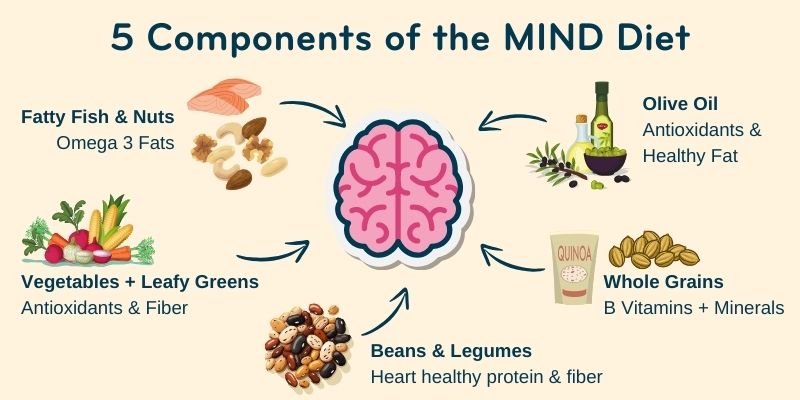
Learn more about the MIND diet: https://rsh.md/3OB3pYu
3. Move your body
Exercise benefits the brain as much as it benefits the body. A combination of heart-pumping aerobic movement paired with resistance training sends signals throughout the body that influence metabolism and overall health.
4. Check the basics before buying the fancy supplements
If brain fog is persistent or new, talk with your healthcare professional about whether an evaluation of things such as these makes sense for you. The following labs may be a place to start:
- CBC
- Iron/ferritin and iron studies
- Vitamin B12
- Folate
- Thyroid function
- Glucose/A1c
Testing should be personalized not a fishing expedition.
And what about supplements?
This is where there can be a lot of noise. You may see claims for:
- Lion’s mane mushrooms
- B vitamins
- Omega-3s
- Magnesium
- Creatine
- CoQ10
- Adaptogens
- Herbal “brain boosters”
- Nootropic blends
There’s definitely some interesting and valid research behind them. But interesting research is not the same thing as proven treatment for brain fog. The best supplement is usually the one that addresses an actual need.
- If you’re deficient in B12, correcting B12 deficiency makes sense.
- If your diet is low in omega-3-rich foods, increasing fatty fish may be worthwhile.
- If you’re iron deficient, addressing the deficiency matters.
But taking a variety of supplements while sleeping five hours a night will not address the cause.
Fuel Your Brain. Flourish in Midlife.
You don’t have to accept feeling exhausted, scattered, and mentally cloudy as the inevitable price of getting older. Midlife can be a powerful opportunity to understand your body differently. Try not to chase perfection or the newest supplement on your IG feed.
Get curious! Recognize the clues, connect the systems, and give your body the fuel it needs to do what it was designed to do. Your brain is part of your whole body. So, let’s treat it that way.
Brain fog rarely comes from one cause. A useful next step is sorting out potential causes and how to leverage food as medicine. If you want help with the food and nutrition side, sign up to work with me through Nourish.

