
 The list of anonymous meetings is getting longer and longer, and it may not be too long before we add another. The media has now grabbed a hold of some foods that can get you hooked; Chocolate, cheese, sugar, salt and caffeine top the list. It comes as no surprise that these foods can cause changes in the brain that keep us coming back for more.
Certain foods and drugs both have chemical compounds that target the Hedonic system, or the brain’s reward circuit, which is responsible for attentional bias. Attentional bias is the amount of attention paid to highly rewarding stimuli at the expense of other stimuli.
This system is housed in the Nucleus Accumbens.
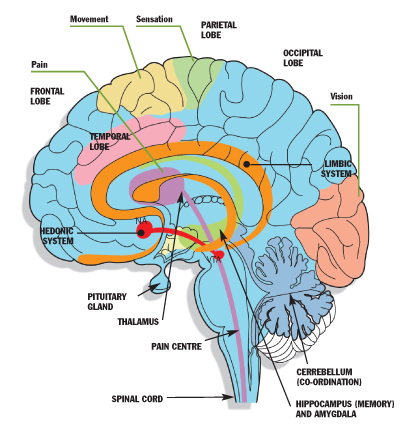
Several neurotransmitters, including dopamine, endorphins and endocannabinoids are invited to the party. Popular drugs, such as nicotine, alcohol, caffeine, opiates, cocaine and amphetamines, target dopamine to increase a sense of pleasure and reward. They do this by increasing brain activity in the orbito-frontal cortex (reward), which then sends signals, to the sensory cortex (increasing sensitivity to cues) and this promotes decreased activity in the pre-frontal cortex (self-control). While this circuit is firing, dopamine levels increase and then over time these higher levels decreases the availability of dopamine receptors and ultimately modulate, or change, the genetic code, which increases the need for more dopamine to produce the same effects. Before you start “hating on” dopamine, please note that dopamine is just the host of the party, who invites others to join in. In other words, dopamine acts as a gatekeeper for other elements that ultimately produce the most effective and enjoyable, behavior/experience.
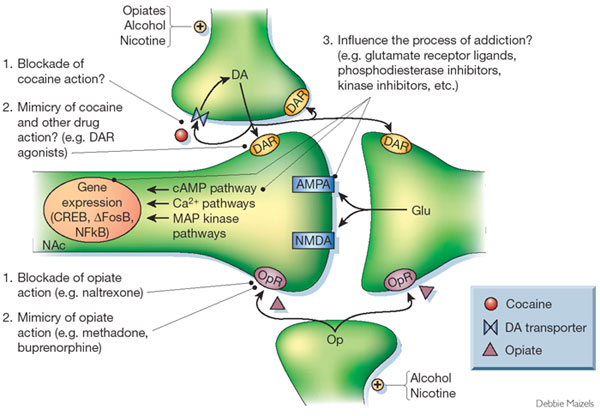
It is also important to point out that even though food and drugs flip the same switch they affect the system differently.
FOOD such as those below, indirectly increases dopamine through palatability (tasty foods) which increases Endorphins and Cannabinoids and promotes changes in levels of Ghrelin, Insulin and Leptin. The end result is a 150-300% increase in dopamine.
- Chocolate contains theobromine, phenyethylamine, anandamide and tryptophan which can produce pleasure-inducing effects. It also contains alkaloids (tetrahydro-beta-carbolines) which are present in alcohol and have been linked to alcoholism.
- Casein, which is the main protein in cheese, can produce morphine-like effects in the brain during digestion due to casomorphins. Cheese, like chocolate, also contains phenylethylamine.
- Processed meats can also trigger an addictive response according to scientists at the Scripps Research Institute in Florida who found that when they fed junk food, including fatty meats, to rats the mental response was the same as when those rates consumed cocaine or heroin.
- Coffee, which is the most socially-accepted addiction and is a popular drug of choice due to its ability to stimulate the mind and body. However, caffeine withdrawal can have several side-effects including headaches, irritability and depression.
- Sugar increases a compound called 5-HT, 5-hydroxytryptophan which is a pre-cursor for serotonin.
DRUGS can directly increase dopamine through neurotransmitters, and like sugar, alcohol also increases 5-HT. The end result of this pathway is a 300-600% increase in dopamine, thus making drugs more addictive.
So, what’s the bottom line? After considering the science and the research, my opinion is that some foods can be as addictive as drugs. This can be a recipe for disaster because Americans have an abundance of refined foods that are readily available (easy to access with reduced time to pleasure. My personal targets are refined foods because it is this extraction process that increases the potency of addictive flavors- Sweet or Salty. We see this process used in the formulation of other drugs like cocaine and heroin.
I encourage my clients who claim that they are addicted to foods to treat it like an addiction and pursue avenues to re-wire the circuitry. This means limiting your exposure to the foods, as well as the environmental cues by:
- Decreasing Distractions when eating (aka turn off the television)
- Limit portion sizes and avoid eating out of a larger container
- Sit at the table to eat
- Eat more slowly and enjoy your food
- Decrease dining out opportunities
It is also to continue to feed the circuitry with non-food rewards like hugs, laughter, and exercise!
Written by Cassie Vanderwall, MS RD LDN CPT


Comments
3 responses to “You might as well face it your addicted to…food?”
[…] is no doubt that food can be addicting, and it should come as no surprise that many of the foods that individuals turn to cause changes in […]
Hi there I am so excited I found your site, I really found
you by mistake, while I was researching on Google for something else, Nonetheless I am
here now and would just like to say thanks a lot for a tremendous post and a all round entertaining blog (I also love the theme/design),
I don’t have time to browse it all at the minute but I have
bookmarked it and also included your RSS feeds, so when I have time I will be back
to read a great deal more, Please do keep up the awesome b.
Thanks a bunch for sharing this with all folks you actually know what you
are speaking about! Bookmarked. Kindly also seek advice from my web site =).
We could have a hyperlink exchange agreement among us