Written by: Cassie Vanderwall, MS RD, CD, CPT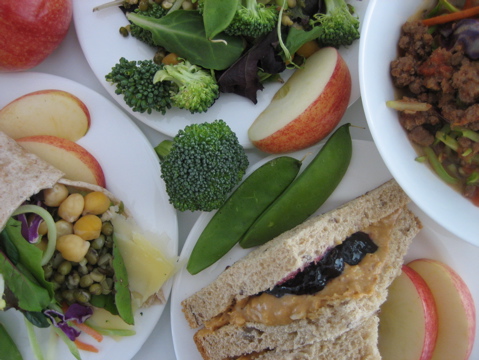
Taking a lunch break seems to be something of the past and many professionals brag about the years that have passed since they have “taken lunch.” Eating during the middle of the day, and for many the work day, can be just as difficult as ensuring one has breakfast before they head out of the door. A healthful lunch requires planning, preparation and personal boundaries, as well as, strategies to overcome common barriers.
One step towards eating lunch is packing and bringing a lunch with additional snacks, which will accommodate the lack of time and/or healthful options that some people encounter. I encourage my clients to prepare their breakfast, lunch and snacks for the next day the night before while they are preparing dinner. This works well in a family setting because everyone can play a part.
What would an RD-approved lunch look like? I’m glad you asked! Principles of a healthful meal apply to any meal of the day:
- Choose food items from at least 3 food groups (Whole grain, lean protein, vegetable, fruit, and dairy).
- Pack a sugar-free beverage or a water bottle.
- Opt for foods that are nutrient-dense versus calorie-dense.
- Prepare for the 3pm snack attack.
The most popular lunch items include sandwiches or frozen dinners. These can get mundane quite quickly for some people, and others do not mind eating the same thing everyday. For those who don’t mind a sandwich, top notch fixings include:
- Peanut, almond or Cashew butter- Most of the “natural” products will contain only the nuts and minimal added salt.
- Skinless chicken or turkey breast- 3 ounces, about the size of the palm of the hand, is a great lean source of protein with minimal added fat and sodium.
- Hummus or baked Falafel- Vegetarian source of protein made from chick peas (garbanzo beans)
- Reduced fat Cheese- A serving of cheese can pack a hefty number of calories and unhealthful fat, so be sure to choose a light cheese option, which is similar to 2% milk versus whole milk. Choose the option with less than 3 grams of Saturated Fat per serving.
The frozen dinner section can be quite cumbersome and it is easy to be steered by price versus quality. The following brands are both nutritious and delicious:
- Amy’s Light and Lean options are frozen or canned entrees that are typically lower in saturated fat, cholesterol and sodium.
- Kashi’s frozen entrees include a source of whole grain and lean protein and are usually low in saturated fat and cholesterol. These entrees tend to be higher sodium than their counterparts.
Frozen dinners are great because you can grab and go, or store them at work. Most of these entrees do not keep people full for very long, so be sure to pack a serving of fruit, low-fat dairy, and/or extra veggies.
After we select the lunch “entrée” we move on to our “filler foods.” It is best to choose side items at lunch that pack a whole bunch of nutrition without the calorie cost. It also is best to choose items that provide lasting satiety via volume and fiber versus a quick burst of energy. If you’re looking to get outside the [lunch] box, try out the options below:
- Half cup low-fat cottage cheese with 1 tomato and 6 low-fat, wheat crackers
- Peanut butter pita with sliced apple or banana and celery and carrot sticks
- Quinoa grain salad with raw vegetables and dried fruit
- Chicken or Shrimp Kebab with grilled veggies in whole wheat pita
- Vegetable burger on wheat bun with celery and 1 Tablespoon peanut butter
- Baked falafel in whole wheat half pita stuffed with raw cucumber with a serving of fruit on the side.
- Yogurt parfait with light yogurt, low-fat granola and sliced berries
- Large vegetable salad with 1 cup fresh fruit (berries, apples, pears), 2 Tablespoons nuts or seeds and 1-2 Tablespoons light dressing
- Broth-based soup with half a turkey wrap (whole wheat tortilla with lettuce and tomato)
- Leftovers from a nutritious and delicious dinner!
On to the middle of the afternoon! Many people report a 3pm snack attack, or a least a drop in energy that leaves them reaching for a sweet treat and perhaps a caffeinated pick-me-up. To avoid hitting the vending machines- where healthful choices may be difficult to find- I recommend packing a snack that you can be confident will keep you satisfied until dinner. Also, many people work out before dinner and this snack can also be a time to fuel up before exercise. A healthy snack includes a source of energy (carbohydrate) with either a protein or a healthful fat, which helps to make the energy last longer. For pre-workout snacks choose a whole grain or fruit with a lean protein, which may be:
- Light yogurt with a serving of fruit
- Half a turkey sandwich
- Small bowl of cereal
- Glass of milk
- Serving of crackers and light string cheese
Other healthful snack combinations include:
- Dried fruit with unsalted nuts (1/4 cup serving)
- Half a peanut butter sandwich
- Raw veggies with low-fat yogurt dip or hummus
- Baked chips with fresh salsa
- Light popcorn (3 Cups)
- Fresh fruit with 1 Tablespoon peanut butter
The recommendations above can help to provide stable energy and mental focus throughout the day, as well as, prevent over-eating during the evening hours. Planning and preparation are two essential strategies for healthy eating, but as mentioned previously personal boundaries are also important to protect lunch. Granting yourself 20-30 minutes to catch your breath, grab a bite to eat and mentally and sometimes emotionally prepare for the remainder of the day are vital to a healthy lifestyle. Please take this moment to remind yourself that you are worth it!

