
Written by: Cassie Vanderwall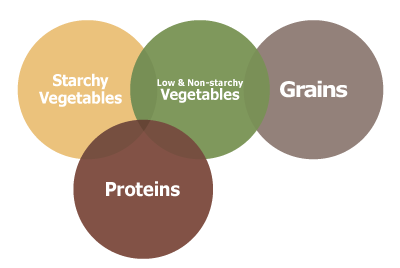
The long-standing theory of food combining originated in the 19th century and is still touted today as a solution to common, complex ailments. The theory is based on the idea that different fuel sources, or macronutrients such as carbohydrate, fat and protein, are digested by different enzymes, in different locations, at different times. The assumption is that if an individual does not combine their foods in light of this theory digestion becomes inefficient and can decrease processes in the liver and promote toxins in the body. This indigestion is attributed to a variety of conditions related to:
- Digestion: bloating, heartburn, gas, constipation or diarrhea.
- Inflammation: allergies, asthma, and headaches,
- Joints: arthritis and bursitis.
- Mental and emotional health: behavioral disorders, fatigue, moodiness, and poor memory.
- Reproduction: infertility and irregular menstruation.
This theory sounds like an easy solution to the illnesses listed above, but is it fact or fiction? Let’s explore the in’s and out’s of this dietary lifestyle in the context of confirmed physiology.
What do we know?
The digestive tract is a complex system that involves many organs and enzymes to process food over a 30 foot-long journey, which takes 24 to 72 hours. Digestion begins even before the first bite of food. The cephalic phase is initiated at the thought or sight of food. These senses excite the cerebral cortex, which sends messages along a neural circuit to ultimately increase acetylcholine to get the digestive tract moving, or contracting. This stimulation also increases several secretions that aid in digestion, including stomach acid, gastrin and somatostatin. This physical response increases an individual’s cues for hunger that are difficult to ignore (thoughts of food, smell of food, salivation, growling stomach, and perhaps mild stomach pangs).
Now the body is ready to eat! Digestion begins in the mouth via chewing mixed with saliva. Human saliva contains enzymes: amylase that is used to breakdown carbohydrates and lipase that is used to breakdown lipids (fat). This partially digested bolus then works its way to the belly by way of the esophagus.
When food arrives in the stomach there are increased contractions, further increases in stomach secretions (HCl acid, gastrin, pepsin) and a consequent decrease in pH to 1-3. The stomach’s role is to mix food with these secretions, store the food and then empty. The breakdown of food into very small particles takes about 3 to 4 hours before being moved into the small intestine. This rate of “gastric emptying” controls the rate that nutrients (fuel, vitamins and minerals) are absorbed and is being investigated. Slow gastric emptying (fewer bowl movements constipation) is associated with diabetes and GERD, where as a quicker rate (frequent bowel movements or diarrhea) is associated with obesity. The goal would be to achieve a normal rate of emptying (1 bowel movement everyday) into the intestinal phase.
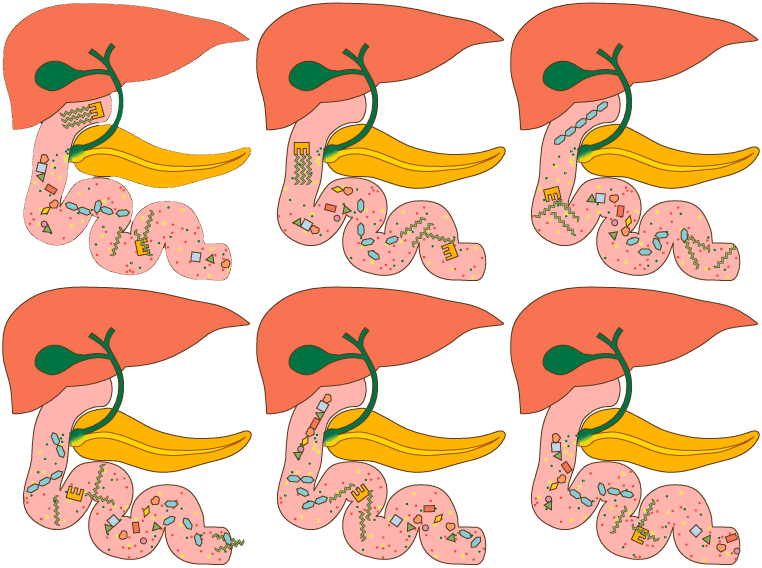 The majority of digestion occurs in the first part of the small intestine (duodenum). It is here that the food mixture, which now resembles a milky substance called chime, is exposed to more enzymes secreted by the intestines and the pancreas, as well as, bile acids from the liver and gallbladder. The condition in the small intestine has a higher pH than the stomach, which creates a less harsh environment for these enzymes to work in.
Digestion of fats from butter, cream and plant-based oils (coconut, palm) begins in the mouth and ends in the liver. The majority of proteins from animals (meat, poultry, fish, shellfish, eggs) are digested in the stomach and duodenum. Digestion of carbohydrates (starches, fruit, and non-starchy and starchy vegetables) occurs along the digestive tract from mouth to anus. Remember, carbohydrates are partially digested in the mouth and then, typically, de-bugged by the harsh pH in the stomach and then further digested in the small intestines by enzymes released by the surface of the duodenum (“brush-border enzymes”). Most of the carbohydrates that make it to the large intestine are fibers.
Absorption of these digested foods begins in the small intestine with the help of finger-like projections called villi. These villi are covered in micro-villi and with this increased surface area they are able to transport the nutrients to the liver to be “detoxed” via the hepatic portal vein.
The remainder of the food that is not absorbed continues to travel along the small intestine to the second (jejunum) and third portions (ileum). Iron, amino acids and broken down carbohydrates (glucose, fructose, galactose) are absorbed in the duodenum. The majority of vitamins and minerals are absorbed in the jejunum. Vitamin B12 is absorbed in the ileum. Fat and water are absorbed throughout the small intestine.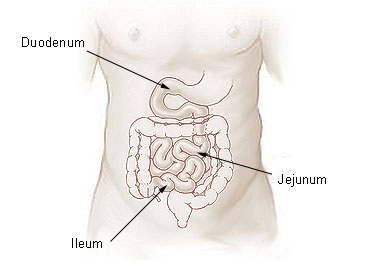
The remnants are passed on to the large intestine, which houses the microbiota, the body’s probiotic community. These good bacteria work hard to ferment the leftovers and produce additional energy and unpleasant gas. The large intestine also is charged with absorbing fluid to create, house and emit a stool of normal texture. Too much fluid left in the large intestine can lead to diarrhea, where as too little fluid results in constipation.
As you can see food is certainly digested by different enzymes at different times and in different locations along the “GI” tract. The theory of food combining ensues that if two different nutrients (starch and protein) are being digested at the same time the process will be inefficient and incomplete due to the “competing” processes. The undigested foods will then end up in the large intestine, which is ill equipped to digest and thus the food will be fermented leading to what the theory coins as “toxic poisons.” The absorption of these “toxins” is what is thought to cause the ailments described above.
What does the Theory of Food Combining recommend?
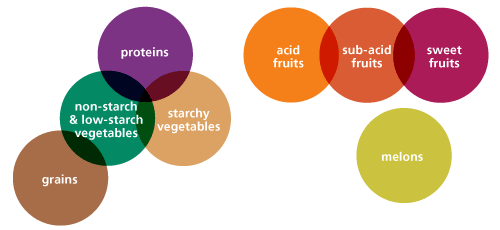
The theory recommends the following dietary guidelines:
- Do not drink during or close to meal times.
- Allow appropriate time for digestion of individual food groups:
- Fruit, 2 hours
- Green vegetables and Starches, 5 hours
- Plant-based protein (beans, peas, soy), 10 hours
- Animal-based protein and fat, 12 hours
- Drink milk alone and allow 10 hours for complete digestion.
- Eat all fruit alone and allow 2 hours for complete digestion.
- Green vegetables can be eaten with all food groups except fruit and milk.
- Fat, Starches, peanuts and chestnuts can be eaten at the same time.
- Cheeses, Yogurt, Avocado, Nuts, and seeds can be eaten with other fats.
If an individual was applying this theory to a typical day may look like the following:
- Breakfast (8am): A serving of strawberries and raspberries
- AM Snack (10am): A medium-sized pear
- Lunch (12pm): Brown rice with green vegetables and raw peanuts
- Dinner (5pm): Baked fish with green vegetables
Fact or Fiction?
The theory recommendations are not harmful, but are they helpful?
Fact- This dietary lifestyle may benefit a person due to the lower calorie intake, decreased frequency of eating, lack of processed foods, increased sources of dietary fiber and natural sources of vitamins and minerals. All of these factors can contribute to a decrease in inflammation in the body and better utilization of stored fuels. Additionally, not drinking with meals can force a person to chew their food better and not dilute the stomach secretions, which aids digestion.
Fiction- The grounds that the body is not equipped to digest two different fuel sources at one time is not true. There are an abundance of foods that contain several food groups that the body readily digests including breast milk (protein, carbohydrate and fat) and beans and peas (protein and carbohydrate).
Those are the facts and the choice is up to you. Good nutrition definitely has a role in preventing and managing many of the chronic ailments listed at the beginning, but the answer is not food combining.

