
Written by: Cassie Vanderwall
 Fat is the most dense form of energy with 9 calories per gram; this is more than twice the number of calories per gram found in carbohydrate or protein. Fat helps the body to grow and develop, absorb fat-soluble vitamins (A, D, E & K), and provide cushioning for organs and cells. Fat is also a great storage space for extra energy in the body. The body is able to find all sorts of places to store fat. When tissue stores max out, the body will often begin storing fat in the organs, such as the liver. High levels of fat in the body also increase the amount of fat that is being transported throughout the bloodstream via lipoproteins, or cholesterol including low-density lipoproteins (LDL), high-density lipoproteins (HDL) and triglycerides. Over the years, researchers have concluded that intake of specific fats can modify not only fat/cholesterol transportation levels, but also fat storage.
We have designated fats as heart healthy versus not heart healthy. Most “heart healthy” fats are those that are fluid in nature (unsaturated) whereas most rigid fats (saturated) tend to increase levels of “bad” cholesterol and thus are not heart healthy. Unsaturated fats are long carbon chains that have one or more double bonds. Mono-unsaturated fats (MUFAs) have only one double bond, whereas Poly-unsaturated fats (PUFAs) have more than one. The image portrays a triglyceride with a saturated fat at the top, followed by a MUFA and a PUFA at the bottom.
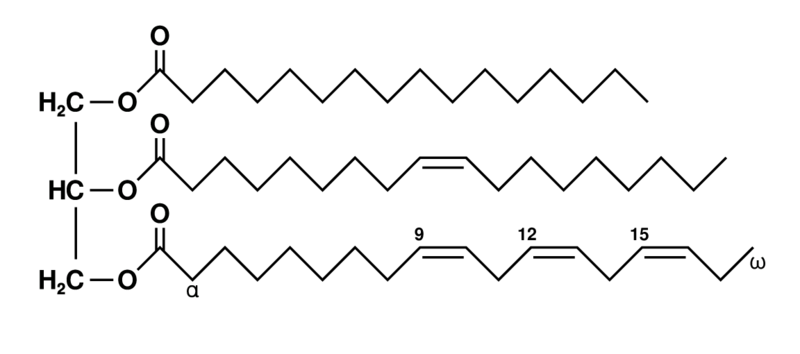
MUFAs are liquid at room temperature and become solid when chilled. Olive, canola, peanut, sunflower and sesame oils, avocadoes, nuts and seeds are all good sources of MUFAs and are quite high in the Western diet. MUFAs are considered a good alternative to saturated fats due to their fluid nature.
PUFAs are liquid at room temperature and when chilled. These essential fats are composed of:
- Omega-9 common in animal and vegetable oils and made by the body,
- Omega-6 from soybean, corn and safflower oils, and
- Omega-3 fatty acids found in fatty fish (salmon, mackerel, herring), some nuts and sunflower seeds. Omega 3 fatty acids can be further broken down into DHA (Docosahexaenoic acid) and EPA (Eicosapentaenoic acid).
Americans tend to consume more omega-6 fatty acids from vegetable oils found in fast and processed foods, versus omega-3’s from cold water fish, nuts and seeds. It is important to note that all PUFAs play a significant role in brain function, immunity and growth, but excessive omega-6 intake may increase inflammation in the body, whereas the omega-3’s tend to put the fire out. Omega-6 fatty acids promote hormones that increase blood clotting and cell growth/division and omega-3’s decrease blood clotting and unhealthy cellular growth/division. This oppositional relationship accentuates the importance of consuming these fats in balance, or lower omega-6 : omega-3 ratio so one function does not over-ride the other.
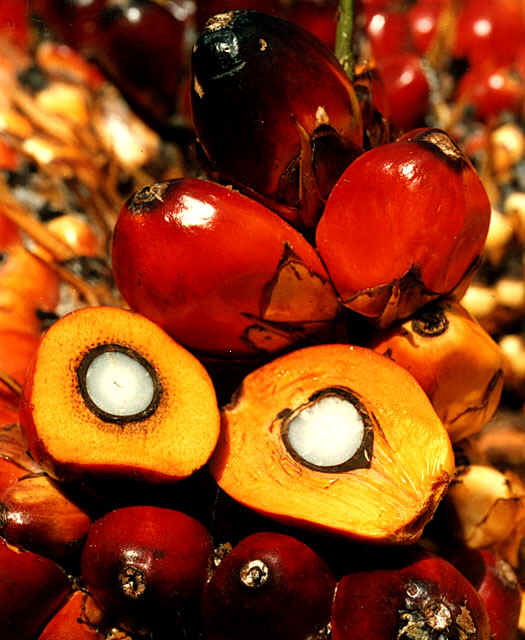 Saturated fats have been coined the “bad” fat since high intake of saturated fat in the West correlates nicely with cardiovascular disease and high LDL (bad) cholesterol. Saturated fats are saturated with hydrogen atoms and do not contain any double bonds. This causes them to be solid and rigid at room temperature. Animal products (meat, poultry skin, butter, cheese, cream, high fat milk, ice cream, etc) are all high in saturated fat. It was thought for some time that saturated fat was only found in animals. But, now we know that tropical oils, including palm (image to the left) and coconut, also have saturated fat. The oil from the palm fruit’s flesh is much healthier than that which is extracted from the kernel. Researchers are now beginning to distinguish the health consequences of the animal versus plant-based saturated fats, because coconut oils do not appear to have the negative effects. Many believe this difference is due to the length of the carbon chains.
According to a recent study on medium-chain fatty acids (MCTs), with 6 to 10 carbons, MCTS differ from longer chain fatty acids. MCTs are more water soluble and are absorbed at a faster rate than longer chains and thus are not as likely to be stored by the body. Additionally, dietary lifestyles high in longer chain fats versus MCTs tend to increase the risk for heart disease and insulin resistance. To make matters more confusing, animals that are grain-fed versus grass-fed tend to be lower in calories and unhealthy saturated fats and higher in omega-3’s, vitamins A and E and other antioxidants.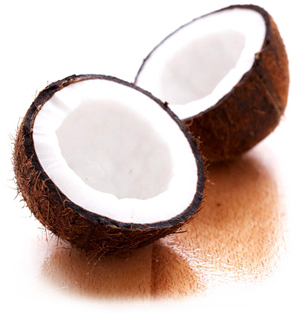
Trans fats were not discussed above, but it is best to keep these sources of fat minimal at less than 1 gram per day.
Current recommendations suggest that most people allot 30% of their daily calories to fat with the majority of the fat coming from Omega-3 sources (fatty fish, walnuts, flax seeds), a bit coming from Omega-6 sources (other nuts and seeds, vegetable oils) and a growing percentage from MCTs (coconut, olive). The recommendation to keep saturated fat low, 7-10% of daily calories, is still a strong guideline due to the prevalence of atherogenic saturated fats in America.
It does seem that nutritional recommendations change with the direction of the wind. I consider this a good thing because it means we are continuing to research and learn what is best for our bodies and overall health. If there are issues, or questions, that you have, please do not hesitate to ask or send a message. I am happy to explore them with you!


Comments
One response to “Fat: The Good, the Bad and the Ugly”
Hi there! I’m at work browsing your blog from my new iphone
4! Just wanted to say I love reading your
blog and look forward to all your posts! Keep up the great work!